
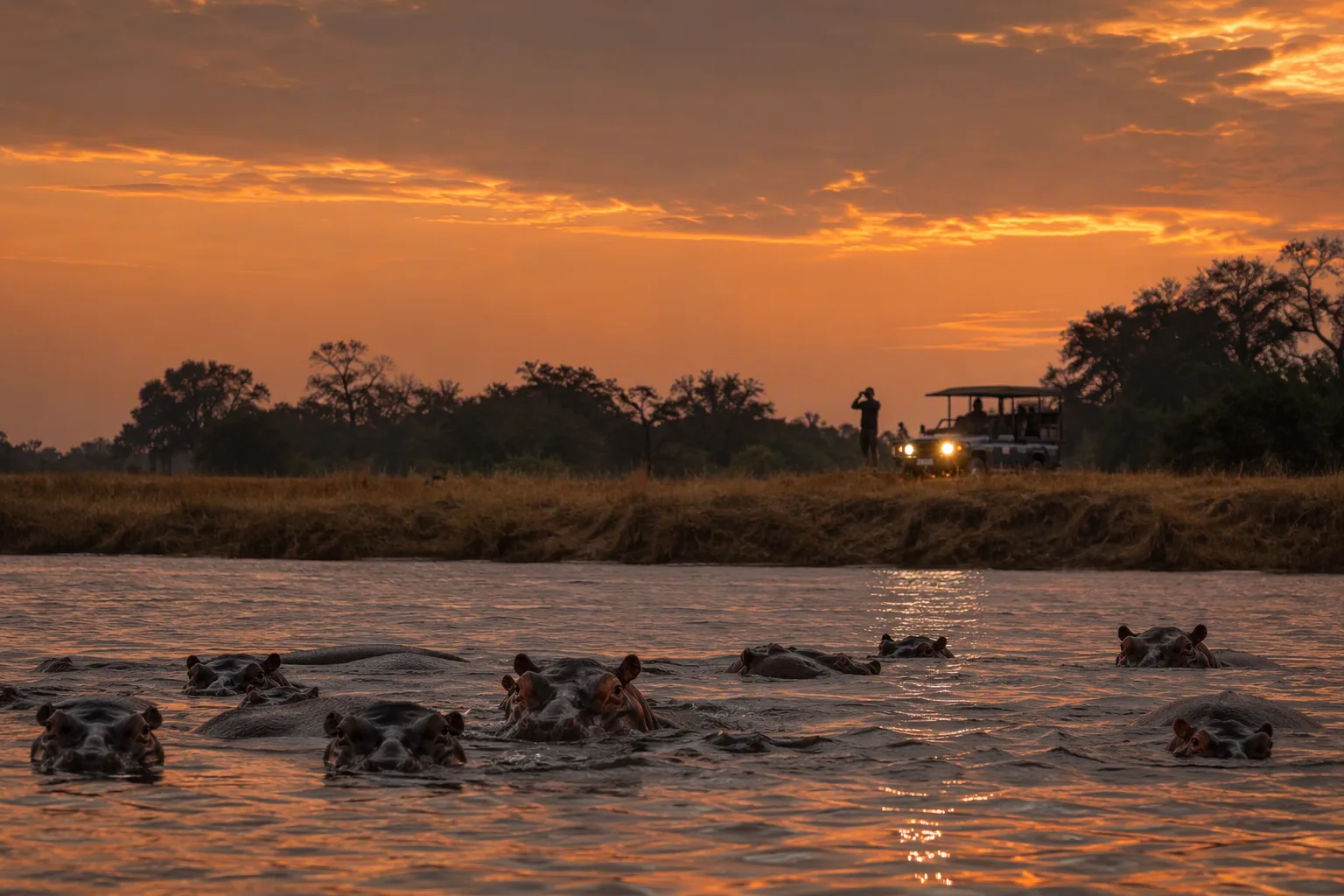
The front line of Zambia's anthrax outbreak is a stretch of river in Muchinga Province, and the numbers coming off it are still moving. As of 21 September, the province had recorded 21 cumulative human cases — seven of them in the most recent reporting week — concentrated around the Munyamadzi Game Management Area in Mpika district, where residents have been infected after handling or eating meat from wildlife carcasses. The animal toll is longer and stranger: 46 hippos reported dead since July, alongside eight elephants, five buffalo and a crocodile.
That last sentence needs its own footnote, and the national One Health coordinator, Raymond Hamoonga, supplies it. Only one of the hippo carcasses has been laboratory-confirmed for anthrax; samples from five buffalo tested negative; ten elephant deaths reported since June remain under investigation. "Buffalo and elephant deaths should not presently be attributed to anthrax without supporting laboratory evidence," he cautioned this month — even as he called the mortality "significant enough to warrant intensified surveillance". The distinction matters: the outbreak is real, but its map is drawn in pencil until the laboratory work catches up.
The response, on paper, is moving at speed. The Zambia National Public Health Institute and the Disaster Management and Mitigation Unit have intensified operations in Mpika — the institute's officials say the active outbreak is currently there, with cases also reported in Sinazongwe in Southern Province. Hunting around the affected area is suspended; wildlife police and checkpoints have been strengthened to secure carcass sites and stop meat moving; and a vaccination campaign that began on 20 September in Mpika, Shiwang'andu and Lavushimanda is targeting 20,000 domestic animals. Nationally, 600,000 vaccine doses have been dispatched across Western, Southern, Eastern and Muchinga provinces, and stock movement permits are now mandatory for traders, with abattoirs directed to slaughter only permitted animals.
Southern Province, meanwhile, has spent a week correcting itself. Reports on 21 September said 257 cattle had tested positive for anthrax out of more than 33,000 tested across the province's camps. On 23 September the Ministry of Fisheries and Livestock issued a clarification in Namwala: Southern Province has recorded no confirmed anthrax in domestic livestock, contrary to those reports. The ministry has not fully explained how the 257 figure entered circulation; what the correction leaves standing is a province on high alert rather than a confirmed livestock outbreak — and a reminder, as the One Health coordinator put it in a different context, that attribution without laboratory evidence is how panic starts.
The memory doing the worrying is 2023: 684 suspected human cases and four deaths across nine provinces before that outbreak was contained, most of it tracing back to people eating animals that had died of the disease. The government's message this month is identical, and it is aimed at exactly the same households: do not open, do not butcher, do not eat an animal that died of an unknown cause — report it. In a year when the rains are forecast to arrive hotter and drier, concentrating livestock and wildlife around shrinking water, that message is the cheapest vaccine Zambia has.
Confirmed vs. alleged
Confirmed: Muchinga Province had 21 cumulative human anthrax cases as of 21 September; 46 hippo deaths have been reported in the affected riverine area, with one laboratory-confirmed; hunting in the affected area is suspended and checkpoints strengthened; a livestock vaccination campaign targeting 20,000 animals began on 20 September in three districts; 600,000 vaccine doses have been dispatched nationally; movement permits are mandatory for livestock traders.
Alleged / corrected: That 257 cattle tested positive in Southern Province (reported 21 September; the Ministry of Fisheries and Livestock said on 23 September there are no confirmed livestock cases in the province); that elephants and buffalo died of anthrax (reported deaths under investigation; buffalo samples tested negative, per the national One Health coordinator).
Sources: Beacon Bio outbreak report (25 Sep 2026); Mongabay, "Anthrax suspected in 46 hippo deaths in Zambia" (24 Sep 2026); Ministry of Fisheries and Livestock clarification, Namwala (23 Sep 2026); ZNBC on the ZNPHI–DMMU response (Sep 2026); Anadolu Agency (12 Sep 2026); BBC News (14 Sep 2026); Zambian Economist on vaccine logistics (22 Sep 2026); WHO Disease Outbreak News on the 2023 outbreak (Dec 2023).
Back to the front page