
Archive note: Lusaka Brief launched in September 2026. This entry was added retrospectively so the record of a significant national moment is preserved. It is based on reporting and official statements that were publicly available at the time.
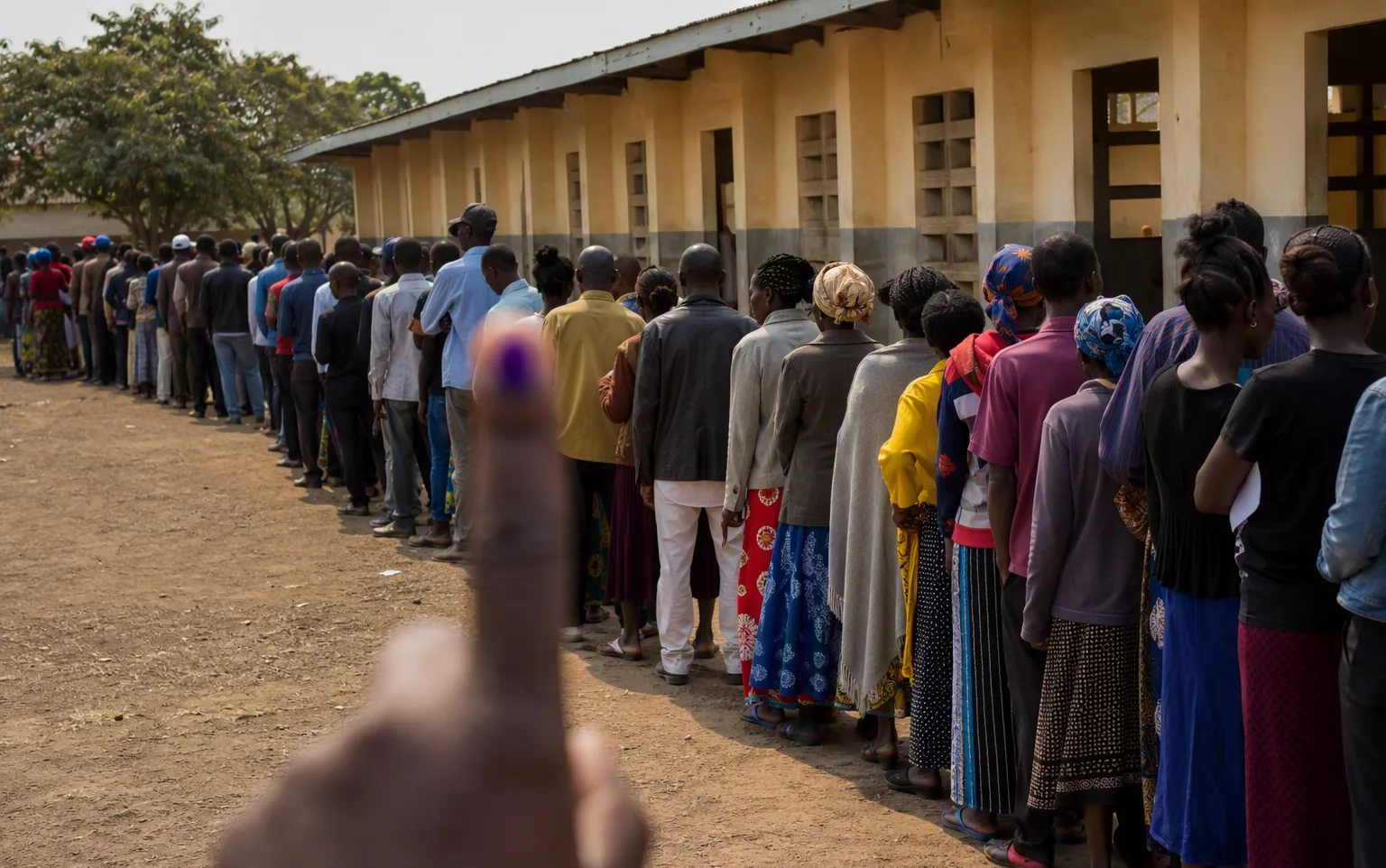
Zambians went to the polls on Thursday, 13 August, in a general election to choose a president, members of the National Assembly, mayors, council chairpersons and ward councillors.
The Electoral Commission of Zambia registered 8,786,300 voters — 4.67 million women and 4.12 million men, with more than four million aged between 18 and 35 — voting at 13,529 polling stations staffed by roughly 89,370 election workers.
Fourteen presidential candidates were cleared to contest, but the race was widely seen as a two-man contest: incumbent Hakainde Hichilema of the UPND, running on debt restructuring, single-digit inflation and free education; and Brian Mundubile of the Tonse Alliance's NRPUP, running on the cost of living, agriculture and democratic freedoms.
It was also the first election under the amended constitution's new architecture: 226 directly elected constituency seats plus proportional representation seats reserved for women, youth and persons with disabilities, alongside presidential nominees.
International observer missions, including from the European Union and SADC, were accredited to watch the vote. Counting began as polls closed, with the ECZ cautioning against unofficial result claims while results were compiled at the National Results Centre.
Back to the front page