
The country's biggest experiment in cheap public credit has hit the wall its critics always said was coming: people do not repay money they think was a gift. The 2026 loan-empowerment component of the Constituency Development Fund has been suspended, and the ministry in charge has put a number on the wound — a repayment rate of 35 per cent since the expanded programme began in 2021. For every K100 pushed out to borrowers across 156 constituencies, about K35 has come back.
The confirmation came from Martin Sodala, Director of Planning and Information at the Ministry of Local Government and Rural Development, answering a question from Mupila Kameya — president of the Zambia National Marketeers Credit Association — at the National Development Coordinating Committee meeting organised by the Ministry of Finance and National Planning. "That 2026 loan empowerment component has since been suspended to allow for recoveries to be made from those who got loans," Sodala said, "and also to address the poor culture of repaying loans by beneficiaries, including marketeers themselves." The money earmarked for this year's loans has been moved to other areas within the CDF value chain; lending continues only out of recovered funds; and there is no date for a return to full disbursement — "we'll be guided at an appropriate time," he said.
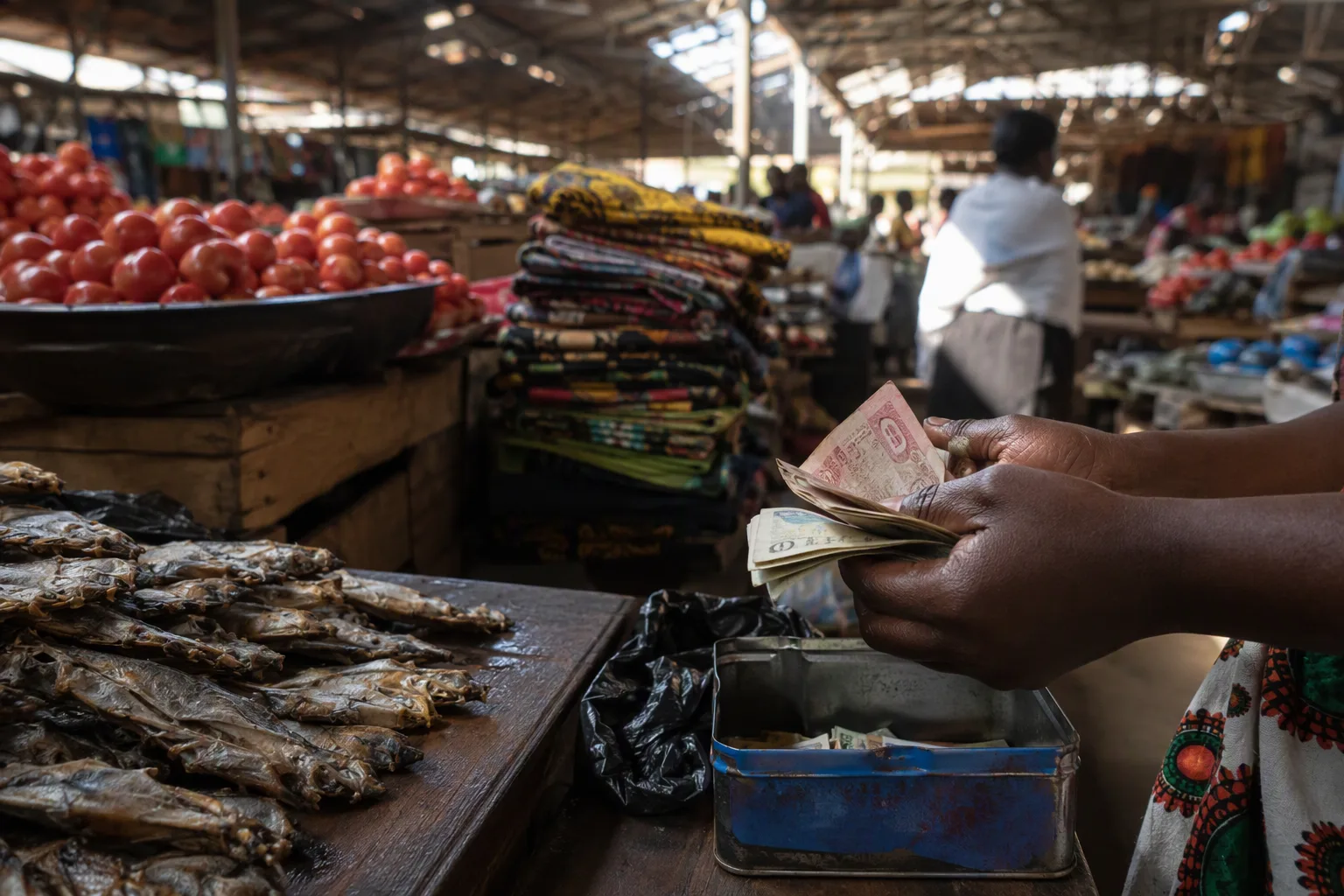
The suspension was first signalled by Local Government Minister Gift Sialubalo last year; this week is when the machinery and the arithmetic went public. The loan window was the CDF's most ambitious instrument — below-market money for enterprises run by youths, women, persons with disabilities and other vulnerable groups — and its closure lands hardest on the constituency it was named for in practice: the marketeers. Kameya's intervention at the NDCC meeting was on exactly that point, and it arrives in the same week those traders are being ordered off Lusaka's pavements by the city council — about 200 of an estimated 8,000 central-business-district vendors had moved voluntarily by the council's own count as the deadline passed. Kameya welcomed the relocations in principle but asked for wider consultation, profiling of vendors, and financial measures for traders the designated markets cannot yet absorb. The state is, in one week, closing their credit line and clearing their pitches.
The rest of the CDF machinery keeps running — and the ministry is keen that it be seen to run. In Mwinilunga, North-Western Province Permanent Secretary Colonel Grandson Katambi (Rtd) pointed to Chief Kakoma's new palace, completed with CDF money, as proof the fund delivers visible results. In Katete, Local Government Service Commission chairperson Laxon Kazabu reported a completed staff audit, qualification check and CDF project inspection at the town council. In Mwandi, local leaders are already urging residents to prepare viable proposals for the 2027 grants and loans window. The fund's buildings and bursaries continue; it is the cash-for-enterprise arm that has become a collections exercise.
The lesson is an old one wearing a new number. Empowerment loans fail in the gap between a political promise and a banking discipline — the money is announced as empowerment, understood as patronage, and pursued as debt. Thirty-five per cent is what that gap looks like in arithmetic. Whether the recovery-first redesign works will be measurable in a way the original programme never was: in kwacha, returned.
Sources: Lusaka Times, "CDF empowerment loans frozen after borrowers repay only 35 percent" (29 Sep 2026); Times of Zambia, "2026 CDF loans suspended" (29 Sep 2026); News Diggers on the initial suspension (Jul 2025); ZNBC and Breeze FM on marketeer and resident reactions (Sep 2026).
Back to the front page