
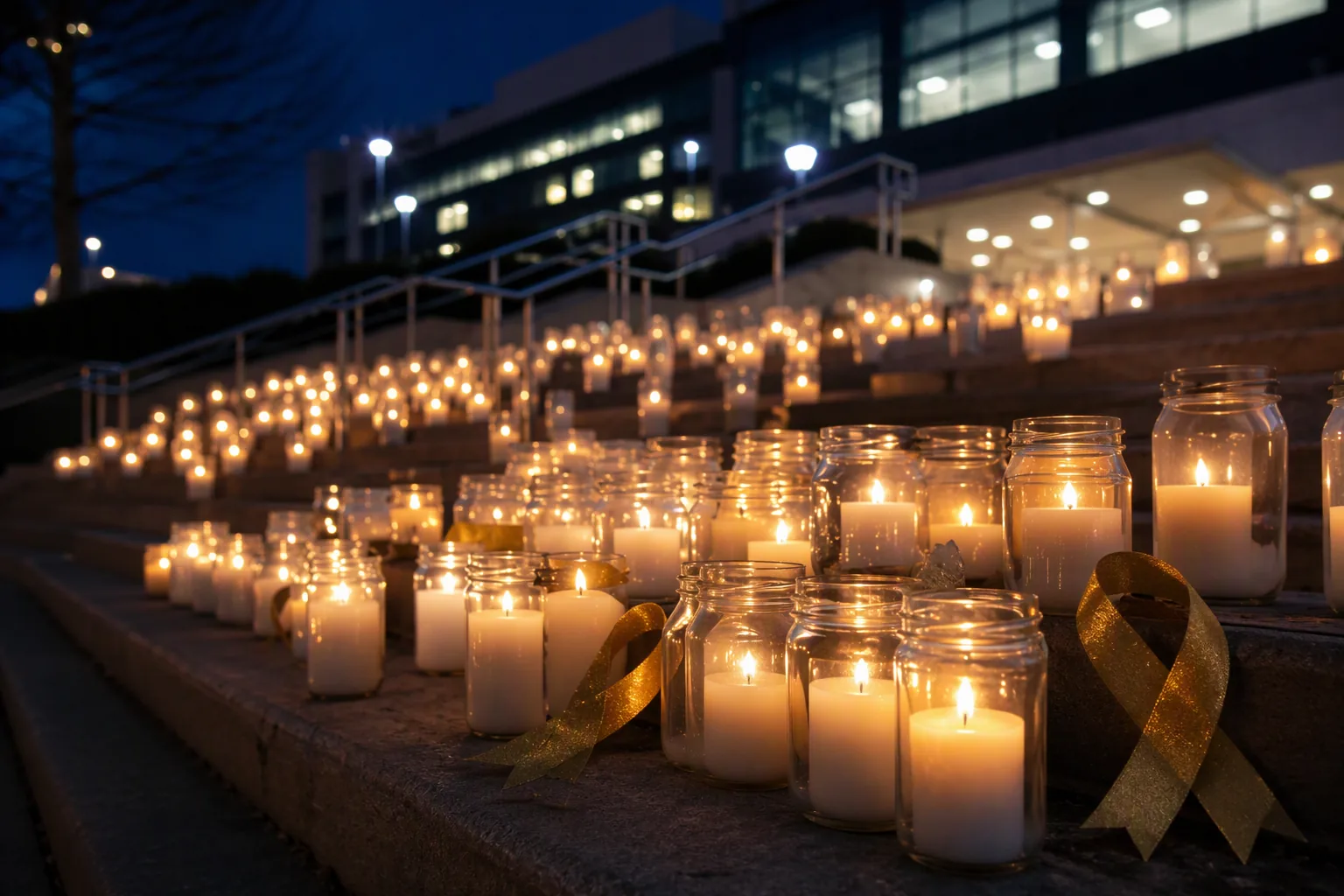
The candles were lit on Friday evening at the Cancer Diseases Hospital in Lusaka, and the speeches around them were unusually candid about the gap between the promise and the ward. Marking the close of Childhood Cancer Awareness Month, the Ministry of Health said childhood cancer remains a pressing public-health concern in Zambia — one measured in late arrivals, long referrals and treatments families cannot always afford to finish.
The global figure, relayed in a speech by Permanent Secretary for Technical Services Dr Kennedy Lishimpi — delivered on his behalf by the hospital's head of clinical care, Dr Paul Kamfwa — is about 400,000 children and adolescents aged 0 to 19 developing cancer every year, with the majority in low- and middle-income countries where survival rates are lowest. Zambia's own challenges were listed without varnish: delayed diagnosis, slow referral pathways, limited access to specialised treatment, medicine availability, scarce specialists, and families unable to sustain months of treatment away from home.
Against that stands a number the government has signed up to. Zambia remains committed, Dr Lishimpi said, to the WHO Global Initiative for Childhood Cancer target of at least 60 per cent survival by 2030 — in a country where, when it joined the initiative in 2019, estimated childhood-cancer survival was around 20 per cent. The instrument now in view is the Global Platform for Access to Childhood Cancer Medicines, in which Zambia is one of twelve early participating countries; a WHO market-shaping strategy published this month aims to make quality-assured children's cancer medicines cheaper and more reliable, with the first manufacturer expression-of-interest round opened in August. "Zambia is proud of our progress," Dr Lishimpi said in that strategy's release, "yet persistent market challenges continue to affect access for children."
The wider cancer burden frames the paediatric one. The Cancer Diseases Hospital disclosed last week that Zambia records approximately 16,500 new cancer cases a year. The hospital itself is mid-way through a government-funded, roughly $30-million re-equipment programme that the International Atomic Energy Agency — which helped train Zambia's first radiation oncologists two decades ago — recently inspected. On Friday the support cast was local: Lions District 413, which has adopted the hospital as a partner, and a survivor, Chawaza Chalwe, whose contribution was the evening's simplest sentence. Cancer, she said, is treatable — when it is caught early. The ministry's plea to parents was the same: unusual symptoms in a child are not to be waited out.
Sources: Lusaka Times, "MOH PS bemoans high cases of childhood cancer" (26 Sep 2026) and "Zambia records 16,500 new cancer cases annually" (25 Sep 2026); WHO, "New strategy to build a healthier market for childhood cancer medicines" (15 Sep 2026); Zambia National Health Strategic Plan 2022–2026 on the GICC baseline.
Back to the front page