
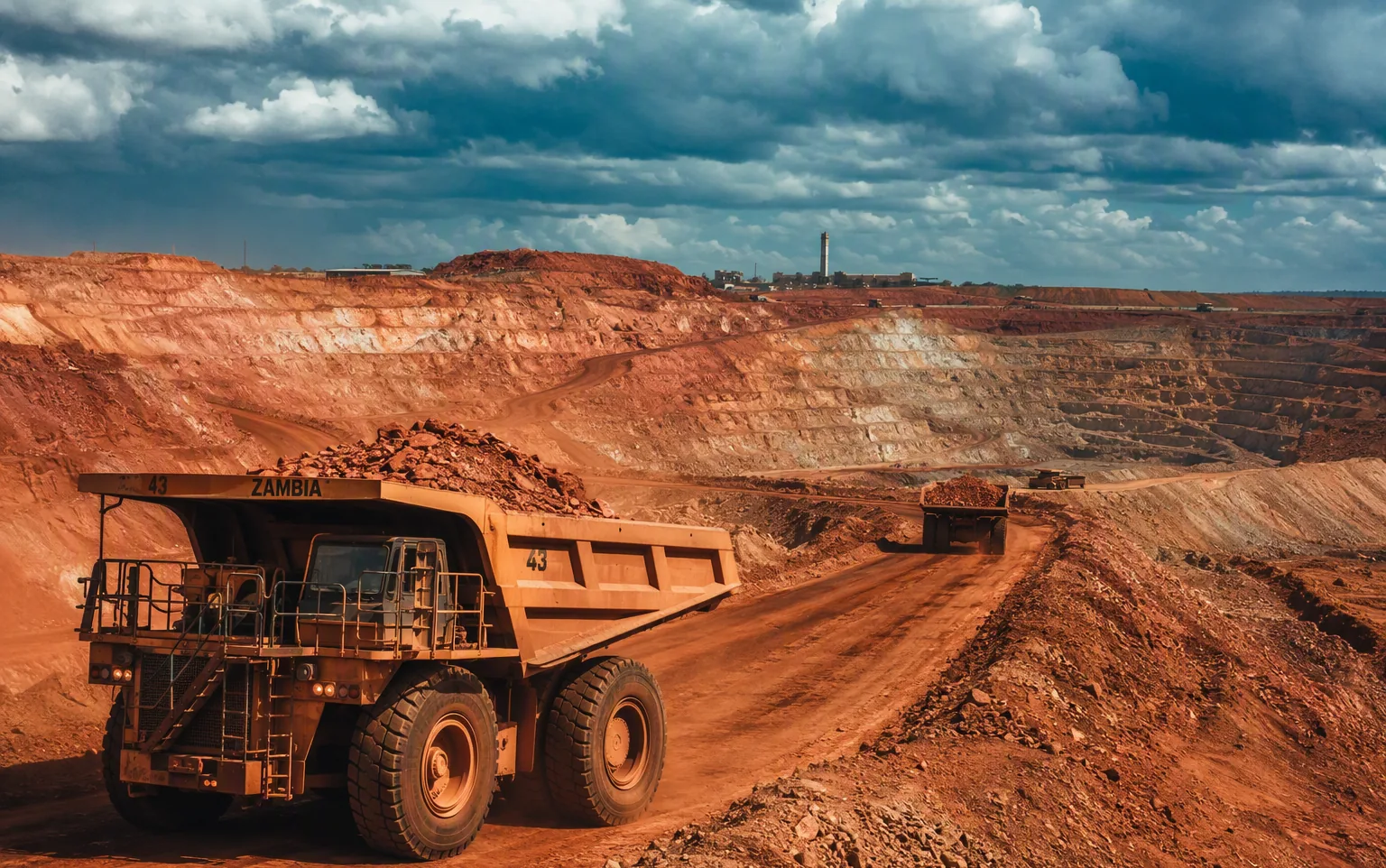
Zambia produced 890,346 tonnes of copper in 2025 — up about 8% but still short of the one-million-tonne target, and a fraction of the 3 million tonnes a year the government wants by 2031. With benchmark copper futures around US$14,000 a tonne, more than 40% higher than a year ago, the stakes of that ambition have never been larger.
The immediate test lands on 30 September, when the suspension of a 10% export duty on copper concentrates expires. The waiver — first imposed in August 2025 and now covering 271,742 tonnes of concentrate — exists because the country's biggest smelters are simultaneously down for maintenance: Mopani's Mufulira smelter faces an extended shutdown through mid-September, Chambishi is midway through a two-month outage, and Konkola's Nchanga smelter began a 60-day shutdown in May.
Duty-free concentrate quotas
- Mopani: 100,000 t
- Barrick Lumwana: 56,986 t
- First Quantum & Nkana Mining: ~43,000 t each
- Lubambe: 15,000 t · KCM: 12,541 t
More than US$10 billion has flowed into Zambian mining since 2021 — Barrick is spending US$2 billion to double Lumwana, First Quantum commissioned its US$1.25 billion Kansanshi S3 expansion, and KoBold's Mingomba project is priced at up to US$2.5 billion.
"A government can tax concentrate exports, but it can't tax a smelter into operating while that smelter is down for repairs."
Miners want the waiver extended; beneficiation advocates want the duty restored to force local processing. The decision will signal whether industrial policy and industrial capacity have finally been sequenced — or whether ambition keeps outrunning the smelters.
Back to the front page