
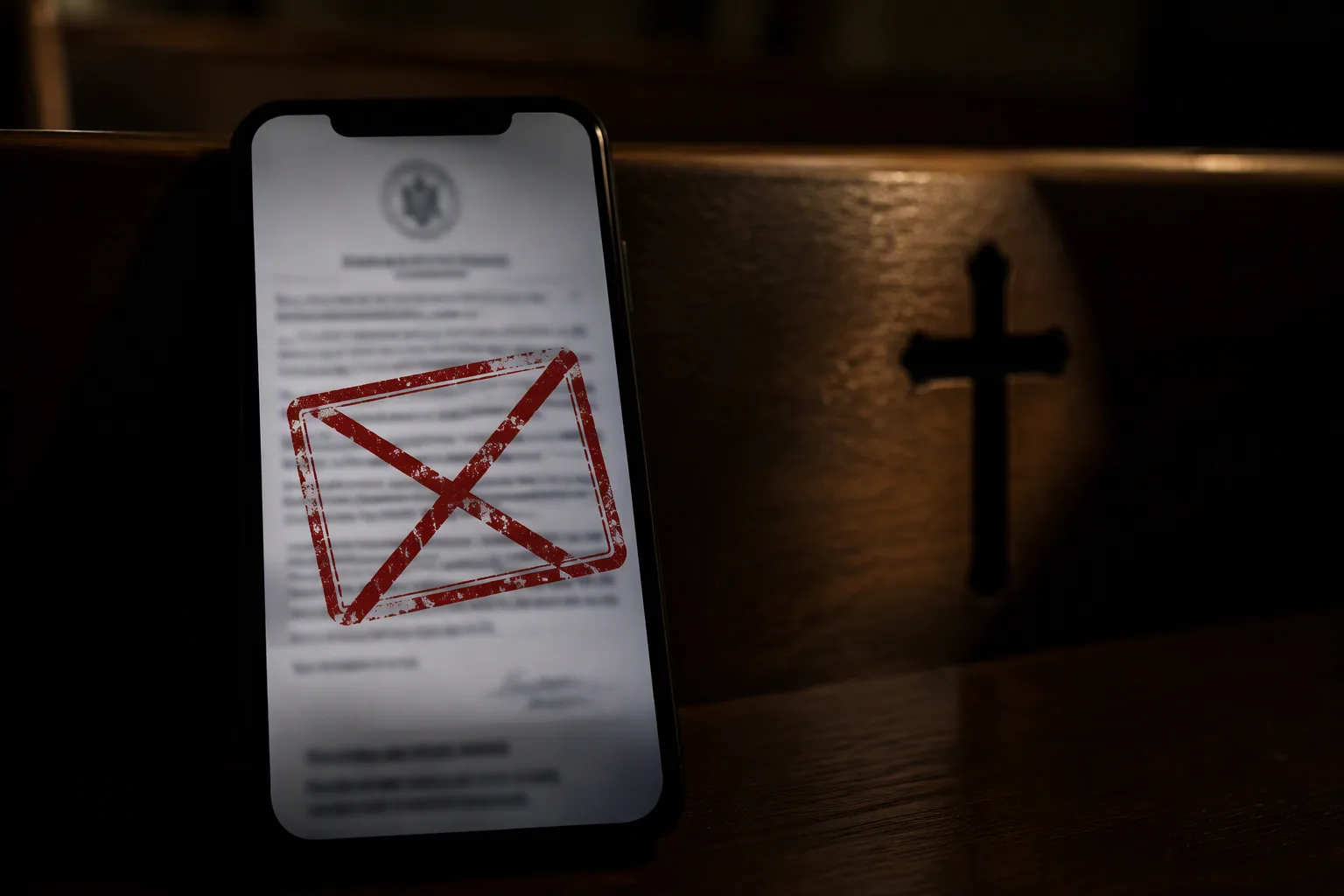
The document looked official enough to forward, and that was the point. A statement circulating on social media this week — formatted to resemble a government directive — claimed the authorities had suspended church meetings, overnight prayers and public crusades until 1 November 2026, purportedly as a public-health measure. It is fake. The Ministry of Information and Media dismissed it outright on Tuesday, and its permanent secretary did not reach for diplomatic language.
Thabo Kawana called the circular "a malicious fabrication" and the accompanying audio doing the same rounds "a figment of a desperate imagination" — the product, he said, of "the panic of opposition political factions" searching for traction. No such suspension exists, no such directive was issued, and churches across the country remain free to meet, pray and hold crusades as they always have. His warning ran in two directions: to those manufacturing forged government statements, who face the law when found; and to media houses and page administrators who amplify unverified documents, whom he urged to authenticate before publishing.
The forgery found its audience in a real anxiety. Lusaka is three weeks into a declared cholera outbreak — 304 suspected cases, 62 laboratory-confirmed, and 11 deaths across seven districts at the last ministry count — and the capital is mid-sweep through Operation Clear Path, the joint police-council decongestion of the city centre that has impounded buses and cleared pavements. In that climate, "government bans gatherings" is a lie with legs: it borrows the logic of the actual news and the fear of the actual outbreak. That is precisely how health disinformation works, and precisely why the ministry answered fast and by name.
The Health Desk's standing advice applies, and it is the same test the ministry asks of editors: a directive that does not appear on an official ministry channel, signed by an identifiable officer, is not a directive — it is bait. Congregations planning weekend services, overnight prayers and crusades may proceed. The only thing suspended this week is the benefit of the doubt for anonymous PDFs.
Confirmed vs. fabricated
Confirmed: The ministry's dismissal of the circular (Tuesday); Kawana's characterisation of it as a malicious fabrication and of the audio as a figment of a desperate imagination; that no suspension of church gatherings has been issued by any government authority.
Fabricated: The claimed suspension of church meetings, overnight prayers and crusades until 1 November 2026 — it does not exist. The ministry's attribution of motive to "opposition political factions" is the permanent secretary's assertion, not an established finding; no forger had been publicly identified by press time.
Sources: Ministry of Information and Media statement disowning the forged circular (7 Oct 2026); ZNBC and Lusaka Times coverage of Permanent Secretary Thabo Kawana's remarks (7 Oct 2026); Ministry of Health cholera situation reports (30 Sep–6 Oct 2026); Lusaka Brief archive on Operation Clear Path (6–7 Oct 2026).
Back to the front page