
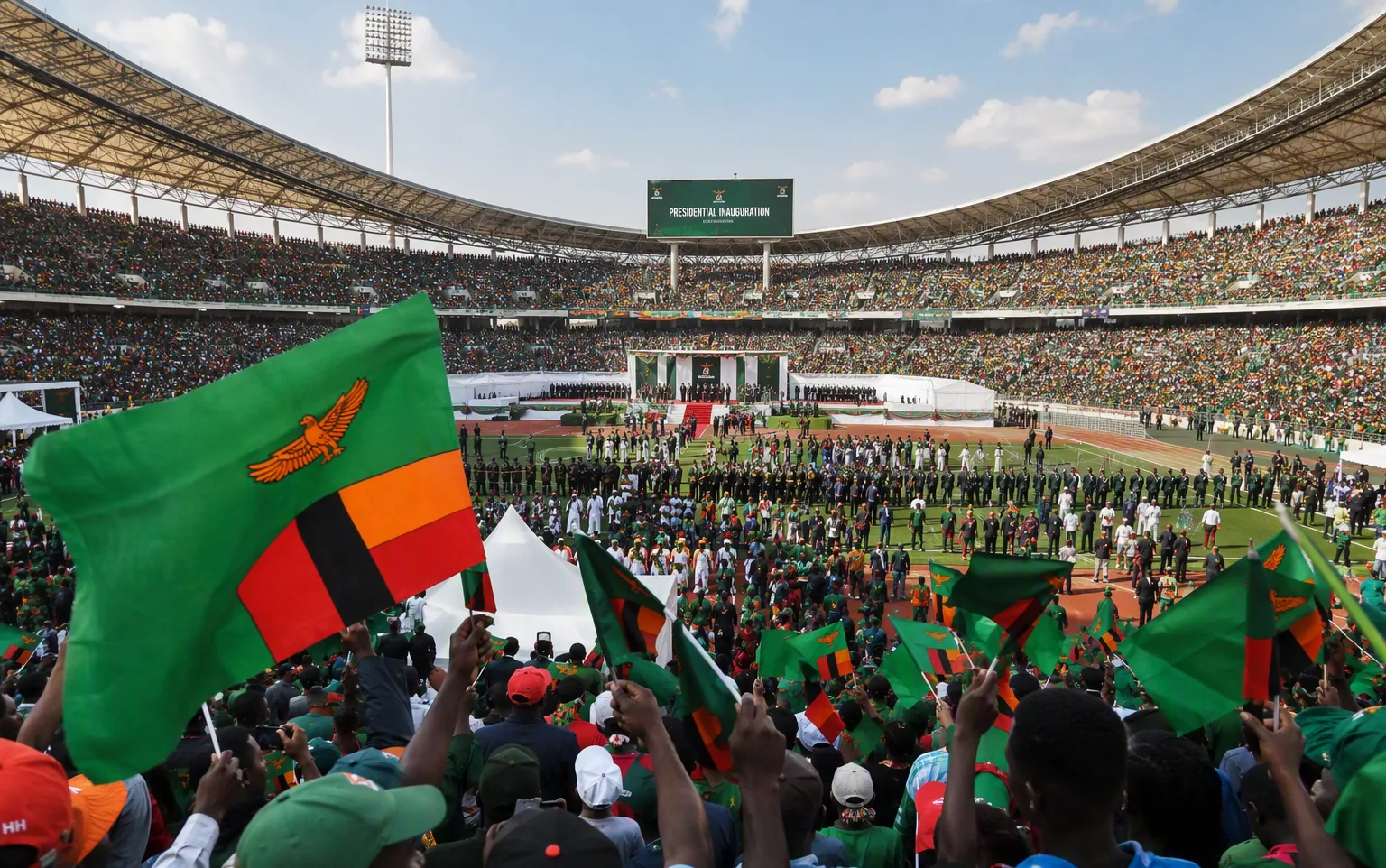
Hakainde Hichilema was sworn in for a second five-year term at National Heroes Stadium on Tuesday, 1 September, before a capacity crowd and a heavy security presence that had been inspected by the country's service chiefs a day earlier. Government declared the day a public holiday to allow Zambians to follow the ceremony.
The inauguration followed the Electoral Commission of Zambia's declaration that Hichilema had won the 18 August general election with 61.4% of roughly five million votes cast — a decisive margin built, analysts say, on an economic record that includes the G20 debt restructuring and inflation brought down from around 23% to 6.5%, its lowest level in nearly a decade.
In his victory speech, the president said his second term would focus on economic growth through increased investment and job creation, and he has repeatedly promised to triple copper production by the end of the term. Manufacturing has attracted more than US$7 billion in investment, with mining close behind at US$6.6 billion.
The dissenting view
On the eve of the inauguration, Socialist Party president Fred M'membe released a wide-ranging policy manifesto — a reminder that the opposition intends to contest the government's economic narrative from day one of the new term.
"The second term will be judged at the dinner table, not at the stadium."
The gap between macroeconomic gains and household reality remains the administration's central vulnerability: with roughly 70% of Zambians living on less than US$3 a day, the test of term two is whether growth statistics finally translate into felt prosperity. Lusaka Brief will track that question through its economy coverage all season.
Back to the front page