
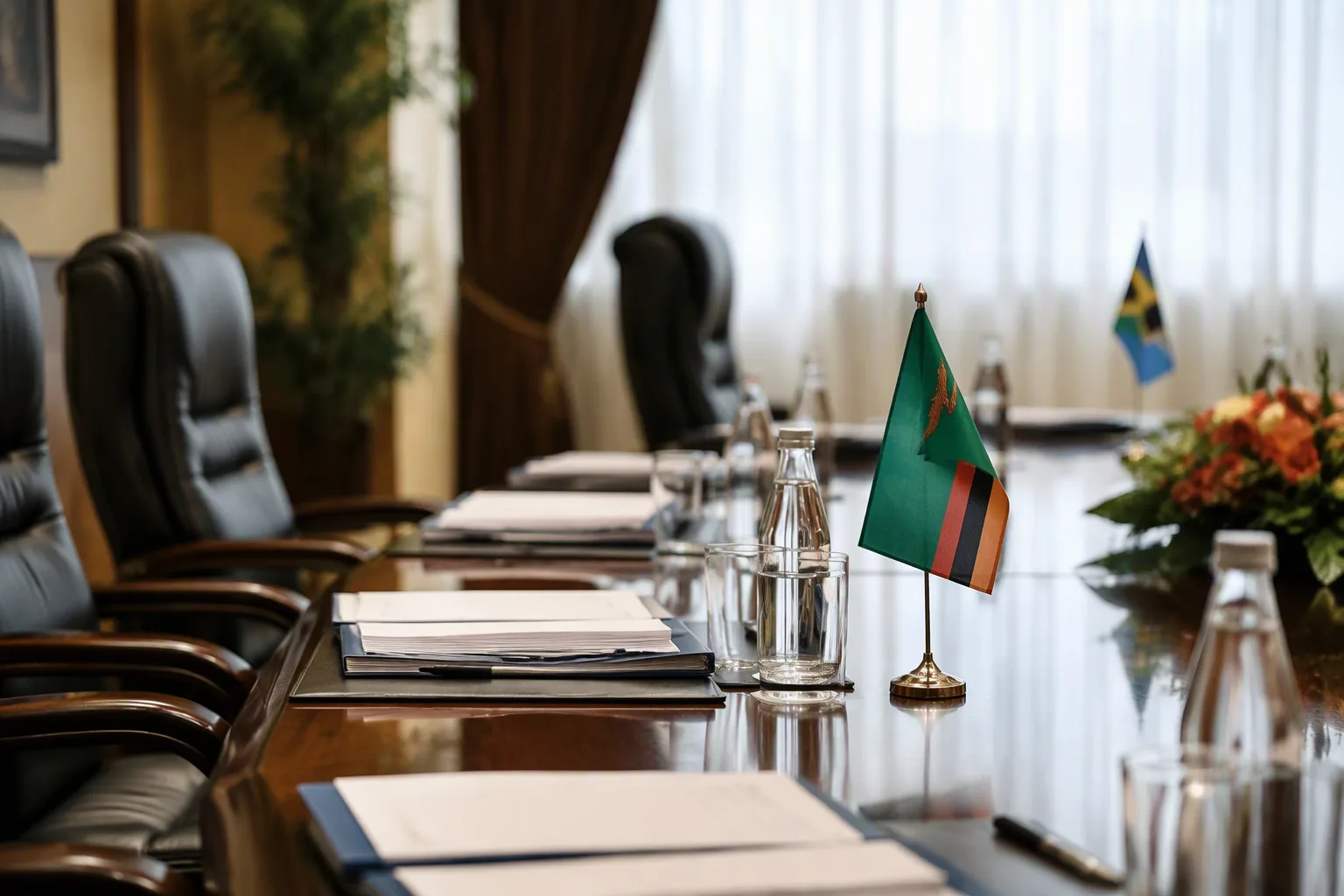
The visitors who matter most to Zambia's next budget are not in Parliament this week; they are in a Lusaka boardroom with the Finance Minister. An International Monetary Fund mission led by Mission Chief Edward Gemayel has opened talks on a successor arrangement to the Extended Credit Facility that concluded in January, and will work with the government and key institutions through 10 October. The agenda is the whole economic programme: the 2027 National Budget, the 2027–2029 Medium-Term Budget Plan, and the structural policies meant to carry them.
The record being built on is the 38-month ECF approved in August 2022 and closed in January after six reviews, with total access of about US$1.7 billion — the programme under which Zambia restructured its defaulted debt, rebuilt reserves to US$5.2 billion and returned inflation to single digits. The government chose not to seek an extension and instead promised a new programme oriented to growth; it now says it hopes to agree one before the end of the year, with average economic growth of 7 per cent targeted over the next three years. Gemayel framed the Fund's side of the table: a successor arrangement should preserve macroeconomic stability and debt sustainability while supporting the Grow Zambia Agenda through private-sector investment, exports, diversification and jobs. An IMF spokesperson confirmed the mission's presence and its focus — fiscal and debt sustainability, reserve accumulation, inclusive private-sector-led growth — while cautioning that discussions are ongoing and it is "premature to speculate on timing or outcomes".
Finance and National Planning Minister Situmbeko Musokotwane set out the government's pitch in one phrase: the focus over the next five years is to maintain fiscal and macroeconomic stability "with a lot of bias towards growth". His four pillars: export-led growth for a country whose domestic market is too small to carry the agenda alone; deliberate courting of foreign direct investment; human capital built wider than degrees — mechanics, plumbers, technicians; and a regulatory and governance environment that attracts investors while letting local businesses start and grow. "It is also time to broaden our thinking about how we facilitate growth," he said.
The mission's timing hands it a live stress test. It arrived the week the Green Paper priced debt service at K212.2 billion over three years against K148.6 billion for the social transfers the Fund insists be protected; the week the fuel excise returned, lifting pump prices by nearly a quarter in one review; and the week the central bank made a 250-basis-point bet that disinflation survives both. Each is defensible alone. Together they are the programme the Fund is being asked to endorse — stability preserved not by standing still, but by a government spending its hard-won credibility on growth. The mission has nine days left in Lusaka to decide how much of that wager it underwrites.
Sources: Reuters via CNBC Africa, "IMF mission visits Zambia for talks on new loan programme" (30 Sep 2026); ICU TV, "Zambia Begins IMF Talk on Successor ECF Programme" (30 Sep 2026); Open Zambia, "Zambia Opens Talks With IMF on New Programme Focused on Growth and Jobs" (30 Sep 2026); Ministry of Finance statement (30 Sep 2026); IMF press release 26/150 on the May 2026 staff visit.
Back to the front page