
Zambia's disinflation has another notch. Annual consumer price inflation eased to 6.1 per cent in September, down from 6.2 per cent in August, the Zambia Statistics Agency announced on Thursday — the lowest reading since February 2018 and a seventh consecutive month inside, or at the edge of, the Bank of Zambia's 6–8 per cent target band.
The composition is reassuring on its face. Food inflation slowed to 5.8 per cent from 6.0 per cent, while non-food price growth held steady at 6.6 per cent. But the monthly figure tells a firmer story: the CPI rose 0.4 per cent in September, the most in five months, after a 0.2 per cent rise in August.
That uptick lands at an awkward moment. The suspension of excise duty and the zero-rating of VAT on petrol and diesel — the twin measures that have compressed pump prices since April — expire on 30 September. The Energy Regulation Board held pump prices unchanged in September, at K25.29 for petrol and K26.86 for diesel; the October review, expected within days, will be the first to price a market without the cushion unless the measures are extended. The ERB's arithmetic is public: pump prices track the landed dollar cost of fuel and the kwacha's exchange rate, and the tax line sits on top of both.
The kwacha, the quiet engine of this disinflation, traded at 19.45 to the dollar on Thursday — about 2.5 per cent softer over the past month but nearly 18 per cent stronger over twelve months, according to Trading Economics data. That appreciation, alongside high copper prices, is what dragged annual inflation down from above 11 per cent as recently as December. The Bank of Zambia has held the monetary policy rate at 13.25 per cent since May.
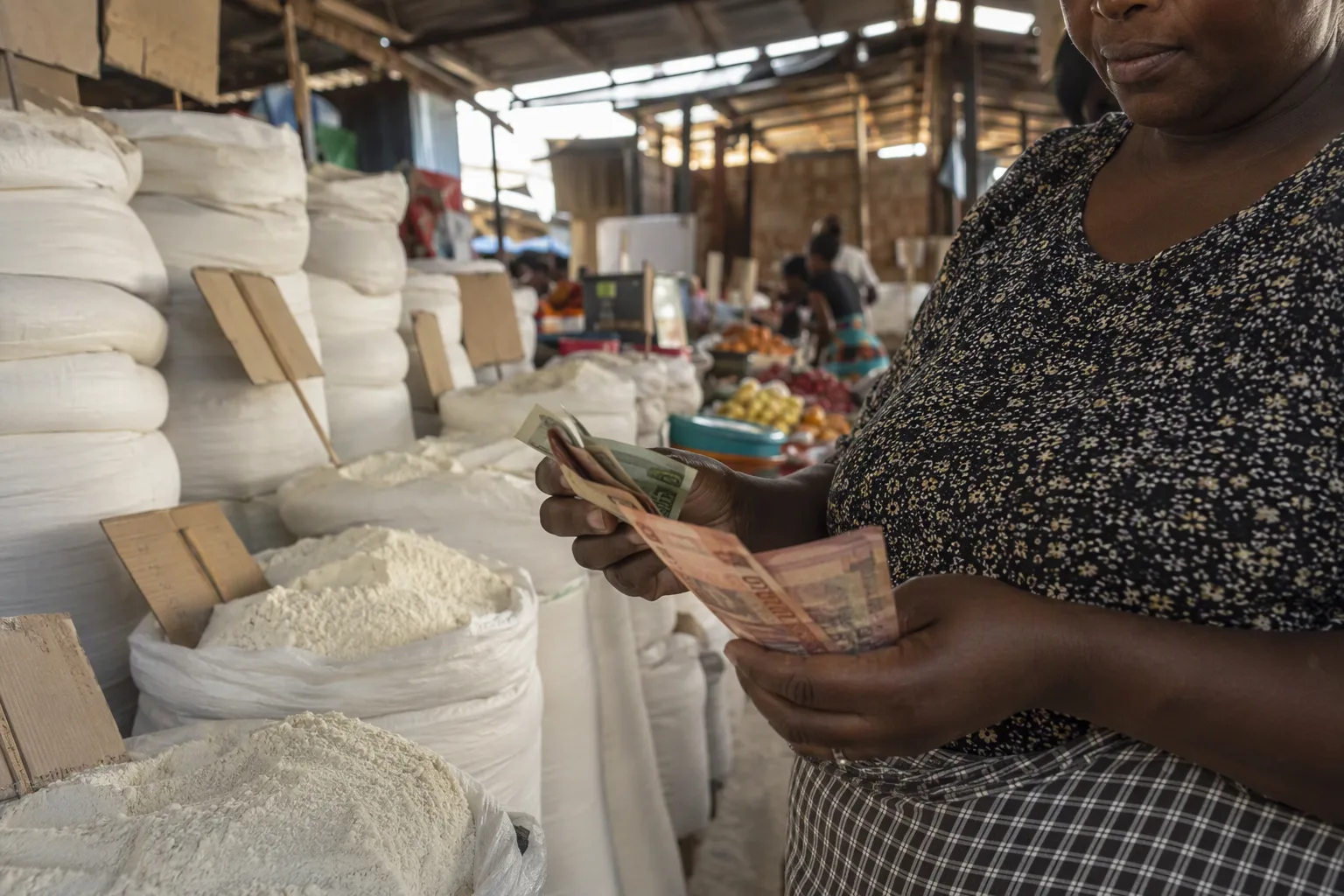
Economists add a standing caveat: the rate has returned to the band, but the price level has not. As Lusaka-based economist Dean Onyambu has argued in a much-cited analysis, a 25kg bag of breakfast mealie meal cost about K105 the last time inflation sat inside the band in April 2019 — and around K302 when it returned this February. Central banks target rates of change, not levels; households shop at levels, not rates. The September print narrows the gap in one direction only.
Three dates now matter: the ERB's October fuel review, any Ministry of Finance decision on extending the tax measures, and the central bank's November MPC — where a seventh month inside the band will test the case for holding 13.25 per cent.
Sources: Zambia Statistics Agency announcement (25 Sep 2026); Trading Economics, Zambia inflation and USD/ZMW (25 Sep 2026); Energy Regulation Board September price notice; Bank of Zambia MPC statements; Dean N. Onyambu, "The Forecast Is Not the Evidence" (2026).
Back to the front page