
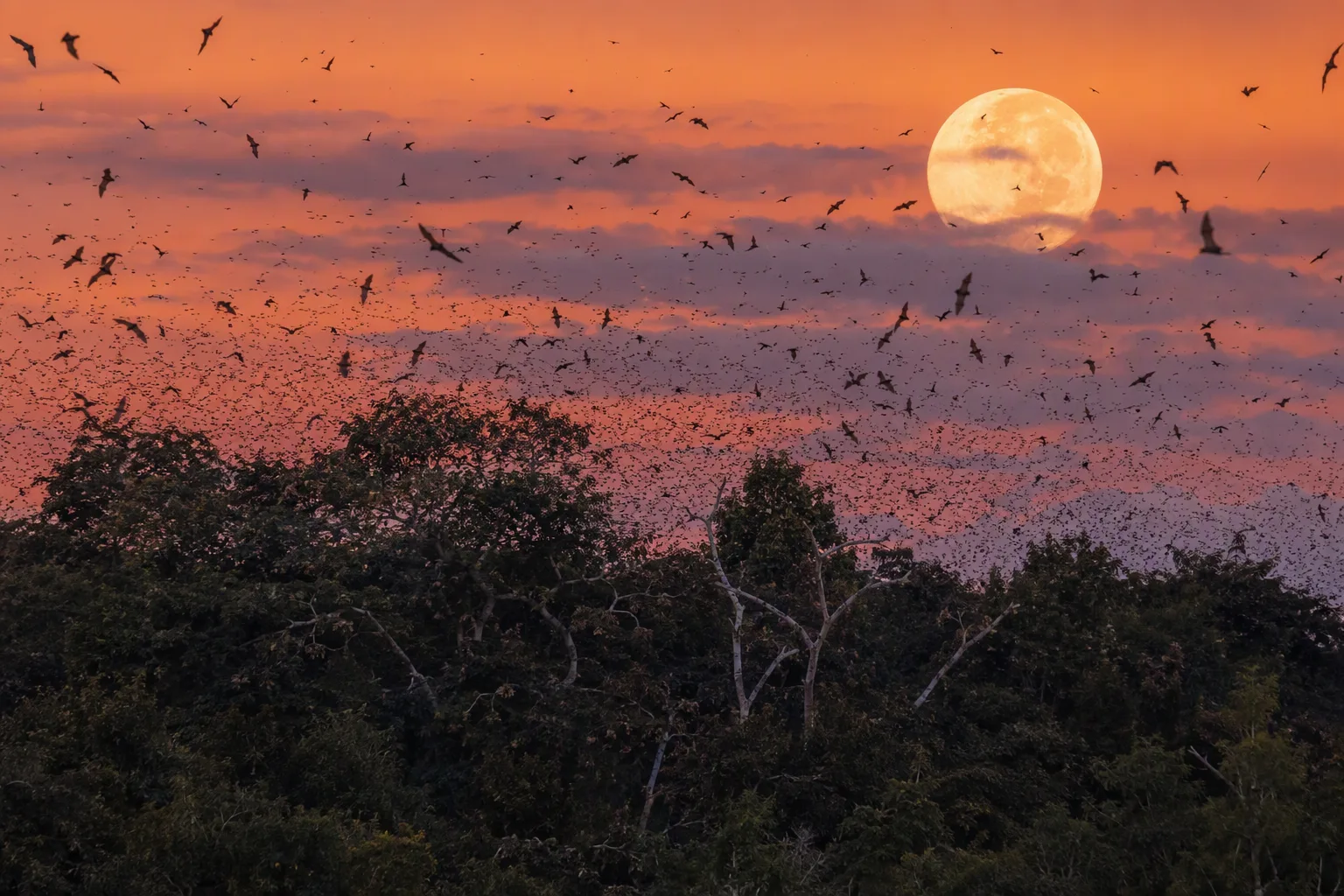
The world's largest mammal migration has its season ticket stamped. Everwild has confirmed that its semi-permanent bushcamp in Kasanka National Park will operate through the 2026 bat migration, hosting guests from 25 October to 1 December — with the go-ahead from both the Kasanka Trust and the Department of National Parks and Wildlife. Each year at this time, several million straw-coloured fruit bats pour into a patch of mushitu swamp forest no bigger than a few football pitches, filling the dusk sky in one of the continent's least-seen spectacles; the camp's short window is timed to the peak of it.
Getting to Zambia keeps getting easier. FlySafair, the South African low-cost carrier, has announced Johannesburg–Lusaka flights from 1 February 2027, five times a week — Mondays, Wednesdays, Thursdays, Fridays and Sundays — adding a price-competitive corridor to the region's busiest city pair. The domestic fleet is growing to meet the season too: Proflight has nearly doubled its Jetstream complement, the workhorse of the Mfuwe and provincial routes, and on the ground in South Luangwa, Shawa Luangwa has added new premium units for the coming high season.
And the bush itself filed the week's most charming dispatch. Guides at Sungani, in one of South Luangwa's more remote corners, report that the leopardess Kuvina — photographed and followed since 2023 — has been seen with two cubs tucked into the undergrowth. A second cub is a small event anywhere; in a season when Zambia is selling conservation as its calling card to the world, it is the kind of news the tourism economy cannot buy. The bats arrive in two weeks. The cubs, one hopes, will still be there when the flights land.
Sources: Zambia Tourism News (October 2026): “Everwild Confirms Operations for 2026 Kasanka Bat Migration Season”; “New RSA–Lusaka Flight for 2027” (FlySafair, from 1 Feb 2027); “Proflight Nearly Doubles Jetstream Fleet”; “New Premium Units at Shawa Luangwa”; “Two Cubs for Sungani Leopardess”.
Back to the front page