
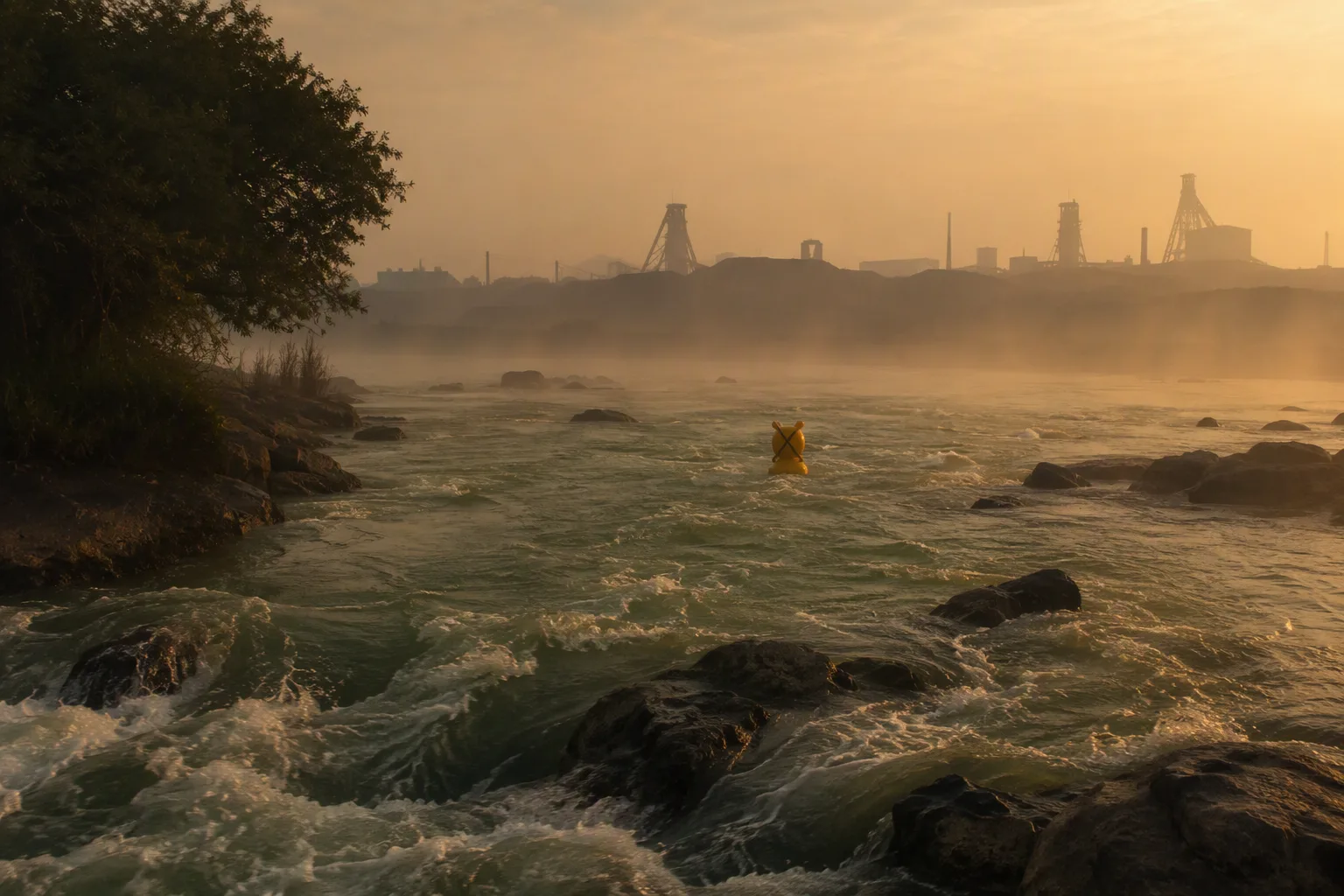
The regulator has issued its orders; the mine has issued its denial; and the Kafue River is now the subject of both. The Ministry of Green Economy and Environment has slapped Konkola Copper Mines with an Environmental Restoration Order over the 28 September pollution incident affecting the Kafue River and its tributaries in Chingola District — directing the company to cease discharging effluent from its Tailings Leach Plant, remove visible tailings from affected areas, assess the integrity of its pollution-control dams and pipelines, and clean up the affected water bodies. A separate Cost Order, issued under the Polluter Pays Principle, requires KCM to meet laboratory analysis and monitoring costs.
The Government's account, delivered by Minister Dr Gilbert Siame, is that ZEMA received notification from KCM's Nchanga Mine of discolouration in the river, which the company attributed to an infrastructure failure — a pipe leak at the Tailings Leach Plant and an overflow from a Pollution Control Dam. A joint inspection by ZEMA, Mulonga Water Supply and Sanitation Company and KCM confirmed discharge affecting the Chingola Stream, Mushishima Stream and the Kafue itself; preliminary laboratory results showed elevated turbidity and conductivity at the Mushishima–Kafue confluence, with pH within acceptable limits. Heavy-metal testing continues, and weekly water-quality monitoring is expected to run on.
KCM's statement, issued in Chingola, contests the attribution at the source. The company says it was the first to observe the discolouration — at the Hippo Pool area, about 18 kilometres from its operations along the Kafue — and proactively reported it to ZEMA; that its operations have recorded no abnormal pollution levels warranting a report and continue normally; and that the District Administration Office has told it an inter-agency team is investigating the source and root cause. It has called for an evidence-based investigation. The company — 79.4 percent owned by Vedanta Resources and 20.6 percent by ZCCM-IH — is simultaneously selling a revival: a Vedanta investment pledge of more than US$1 billion, the Konkola Deep Mining Project to unlock, and 300,000 tonnes of copper a year by 2030. The ministry's half-year figures, published in August, showed KCM's output up 21.4 percent and carrying much of the national production gain — context that sharpens, rather than settles, the regulatory question.
The argument has now widened beyond the two parties. The Centre for Environment Justice has urged the Government to pursue KCM firmly and hold the company responsible, backing the restoration order and fines. "We are in support of the decision made," CEJ executive director Maggie Mwape said. Between the ministry's certainty and the company's denial sits the laboratory: heavy-metal results and the inter-agency probe will decide whether this becomes a compliance file, a prosecution, or a lesson in how quickly a river can become an argument.
Confirmed vs. contested
Confirmed: A pollution incident was reported on 28 September; inspectors confirmed discharge into the Chingola and Mushishima streams and the Kafue River; preliminary results showed elevated turbidity and conductivity; the Restoration and Cost Orders have been issued; KCM has publicly rejected responsibility and demanded an evidence-based probe.
Contested or pending: The source and root cause of the pollution — the inter-agency investigation continues; heavy-metal results; whether enforcement proceeds to fines or prosecution.
Sources: News Diggers, "Govt accuses KCM of polluting Kafue River as mine denies allegation" (1 Oct 2026); Zambia Monitor, "Controversy trails govt's claim on Kafue River pollution, as KCM demands evidence-based probe" (2 Oct 2026); ZNBC, "KCM faces action over Kafue River and Chingola water" (2 Oct 2026); News Diggers, "Govt must pursue KCM firmly over Kafue pollution — CEJ" (5 Oct 2026); Zambia Monitor mining-sector briefing (31 Jul 2026).
Back to the front page