
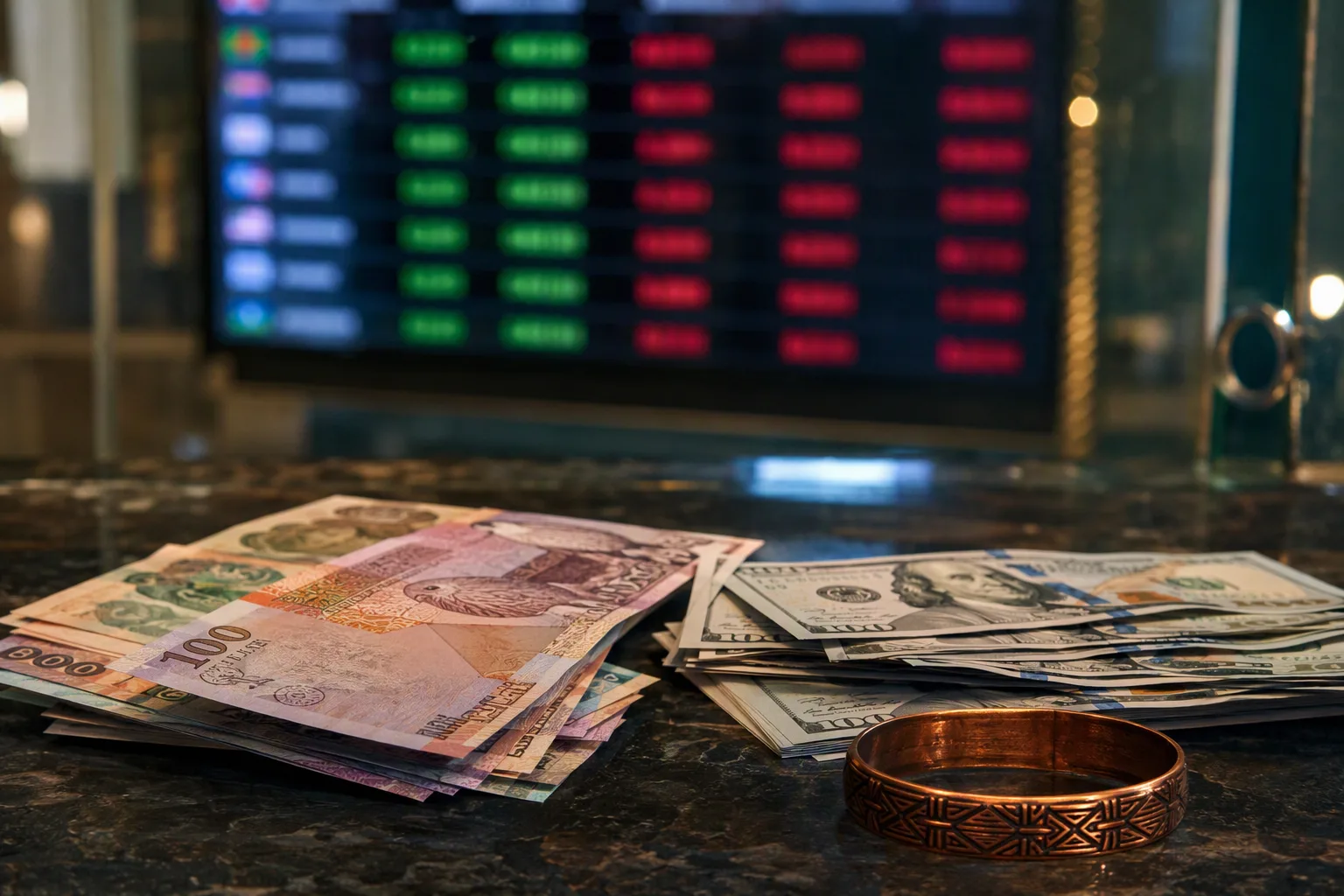
The metal is at a record; the currency is not following. The kwacha changed hands at 19.92 to the US dollar on Thursday, a 0.15 percent slip on the session that completes a 3.53 percent weakening over the past month, according to market data tracked by Trading Economics. Over twelve months the picture reverses — the kwacha is still about 13.4 percent stronger than a year ago, and it began 2026 as the best-performing currency on Bloomberg's global tracker. But the recent direction is unmistakably soft, and it is softening while three-month copper, the commodity that earns roughly two-thirds of Zambia's export income, trades above US$14,600 a tonne.
That divergence has become a public argument. One Lusaka market analyst told the Zambian Business Times this week that with copper above US$14,600, the kwacha "should be around K10 to the dollar" — a provocation rather than a forecast, but one that names the puzzle: export receipts at historic highs, yet the exchange rate drifting the wrong way. The answers offered in the market are structural rather than sinister. Import demand — fuel, fertiliser, machinery — absorbs dollars as fast as the mines supply them; external debt service is a standing outflow; and the US dollar itself has been firm across emerging markets. The Bank of Zambia's December directive requiring domestic transactions to settle in kwacha, and the introduction of yuan-denominated mining tax payments from October, were designed precisely to thicken local demand for the currency — measures whose effects arrive slowly and can be swamped by seasonal pressures.
The stakes are not abstract. Every point of kwacha weakness feeds the price of imported fuel and food, the exact pressure the Evangelical Fellowship asked the President to address in today's parliamentary address, and the channel through which a good copper year fails to reach a household budget. The Treasury's rejoinder is the one-year chart: a currency that has appreciated 13 percent in twelve months is not a currency in crisis, and the World Bank this week upgraded Zambia's growth forecast on the strength of the same reforms. Both things are true at once — which is why the forex bureau board, and not the LME ticker, remains the number most Zambians actually watch.
Sources: Trading Economics USD/ZMW market data (8 Oct 2026); Zambian Business Times, "With copper prices above $14,600/ton, Kwacha should be around K10/Dollar" (7 Oct 2026) — the K10 figure is the analyst's opinion, not a market forecast; Open Zambia/Bloomberg on the kwacha's January rally and the Bank of Zambia settlement directive (Jan 2026); Lusaka Brief archive on the currency's 2026 path.
Back to the front page