
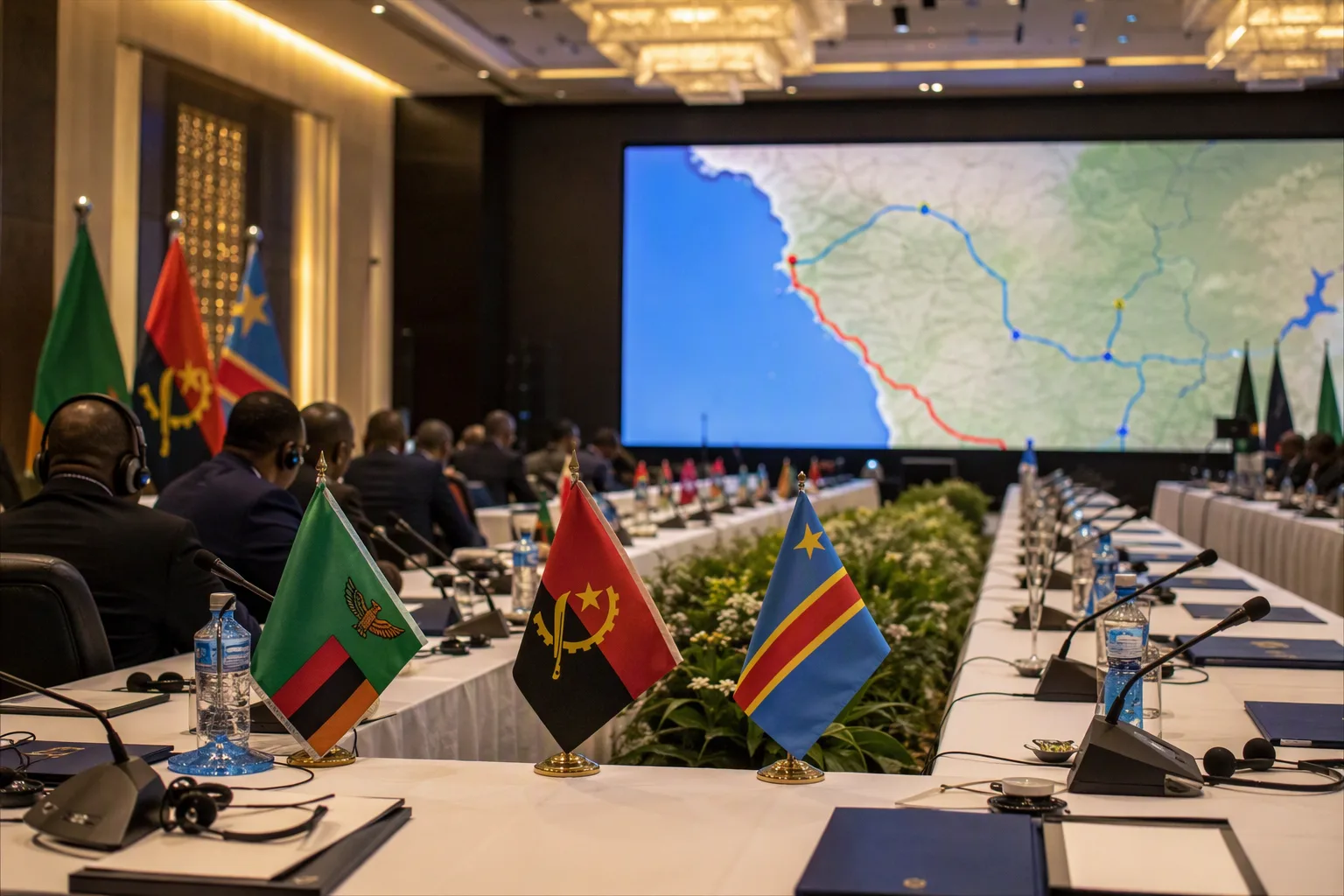
The number dropped on day one. Speaking at the opening of the Second Lobito Corridor Coordination Meeting in Lusaka on Monday — opened by President Hichilema and hosted by Zambia with the World Bank Group, with delegations from Angola and the Democratic Republic of Congo at the table — the Bank's Managing Director for Operations, Anna Bjerde, told the room that the International Finance Corporation has identified 118 anchor investment opportunities for the private sector worth more than US$28 billion.
"The IFC has undertaken diagnostics that identifies 118 anchor investment opportunities for the private sector worth over US$28 billion across mining, auxiliary investments, energy, agribusiness, logistics — and I will add forestry," Ms Bjerde said. The scale of the pipeline, she argued, shows the corridor can draw serious private capital beyond the laying of rail and road. But it came with the day's quotable condition: unlocking it requires the three countries to coordinate infrastructure with investments in skills, power, water, land and the growth of secondary cities. "If we coordinate only on rail," she warned, "we will have built a very expensive conveyor belt." Reliable power matters most, she added, because the mining, mineral-processing and industrial investments the corridor is meant to attract all run on dependable electricity.
Finance and National Planning Minister Situmbeko Musokotwane took the same logic from the Zambian side: the country wants the private sector involved from the planning stage because the development agenda is intended to be private-sector led, and the railway's viability depends on rising production of copper, other minerals and agricultural goods — production that in turn requires investment in roads, warehouses and logistics. It is the reciprocal arithmetic of every corridor: the railway needs the economy as much as the economy needs the railway.
The meeting, which concludes today, is the second of the coordination series opened in Luanda in February, where Ms Bjerde first named lack of coordination as the project's biggest risk and the partners answered with a standing mechanism and a monitoring tracker. The Zambian questions on the table remain concrete: a financed path for the extension from the Copperbelt toward the Angolan border, border procedures that do not tax the corridor's speed away, and a timetable. Monday put a price on the corridor's promise. Tuesday must put dates on it.
Sources: Zambia Monitor, "Lobito corridor offers $28 billion investment opportunities — World Bank" (5 Oct 2026); Ministry of Finance and National Planning statement on the Second Lobito Corridor Coordination Meeting (Oct 2026); Lusaka Brief archive on the inaugural Luanda coordination meeting (Feb 2026).
Back to the front page