
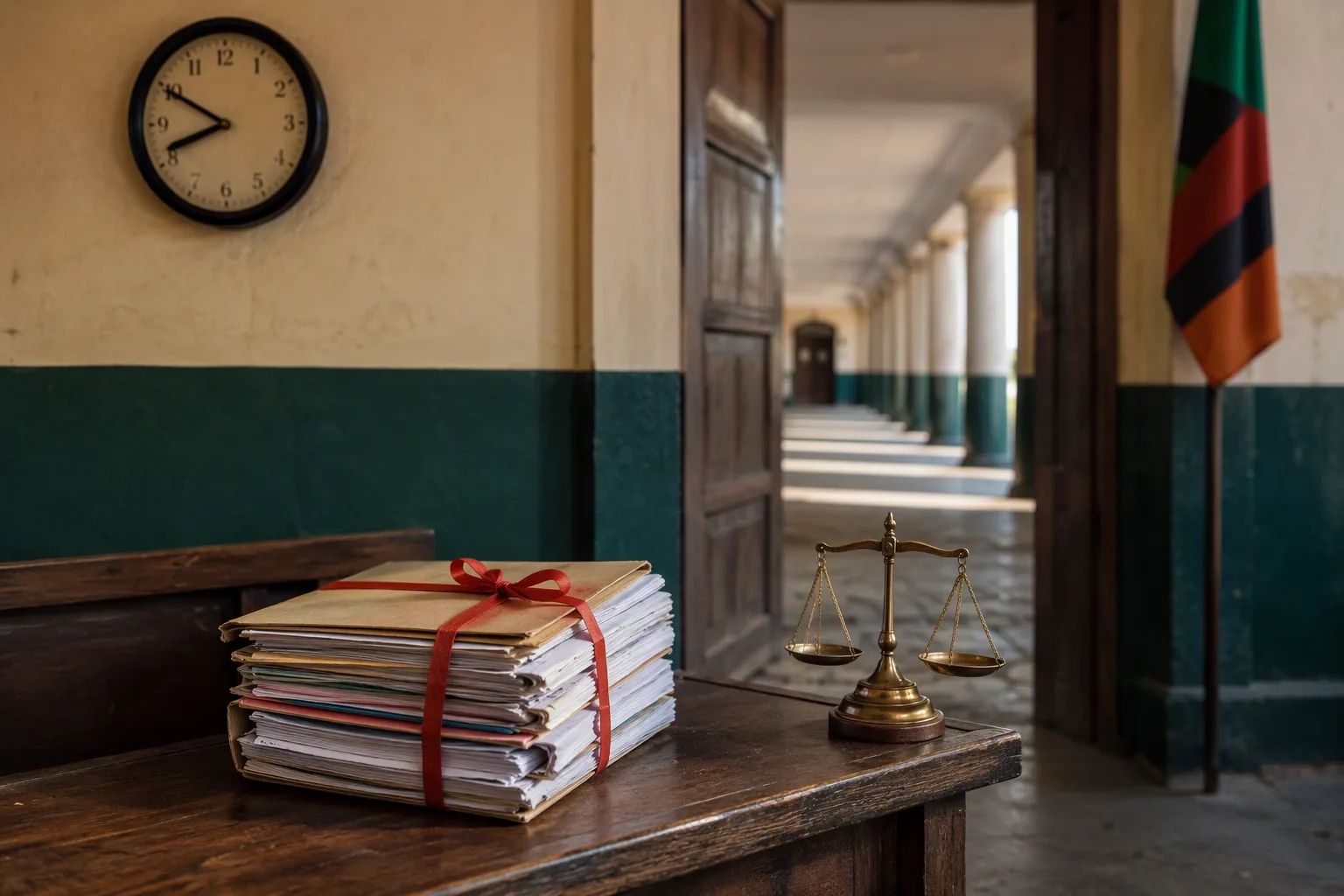
The question is short and the answers are long. Given Lubinda, the former cabinet minister and Patriotic Front figure, re-emerged over the weekend to ask it plainly: how long can treason suspects be held before they are presented before a court? The State, he noted, told the nation it had followed the alleged militia matter for years — and he wants the Director of Public Prosecutions to say what the law allows. It is the same question, in a different register, that the Law Association of Zambia put when it called for the release of Brian Mundubile, Makebi Zulu and other detainees not taken to court.
Gilbert Phiri has already given his answer, late last month, and it is worth reading carefully. It is "appalling", the DPP said, that suspects in Zambia are expected in court a day after arrest whatever the complexity of the allegations; the State wants accused persons before a judge, he insisted, but due diligence must come first — witness statements, medical reports, a fully supported case. He pointed to the treason trial of Edward Jack Shamwana, which took considerable time from arrest to trial and eventual conviction, as the benchmark for how long complex matters take. The comparison is historically literate and politically loaded in equal measure: Shamwana remains the name against which every Zambian treason case is measured.
The legal frame around the waiting is unusually rigid. Treason under the Penal Code covers attempting by unlawful means to overthrow the Government, attempting by force to alter the law or government policy, or using force to usurp executive power; since the 2022 abolition of the death penalty it carries life imprisonment. And under Section 123 of the Criminal Procedure Code, a person charged with treason cannot be granted bail by any court — subordinate, High or Supreme — nor released by a police officer. The 18 charged on 29 August, among them Mr Mundubile, Mr Zulu, businessman Valden Findlay and Patrick Mwansa, are therefore held not because a court has refused bail but because none may grant it.
What the calendar now holds: the seditious-practices case in Solwezi today and tomorrow; the constitutional petition over the circumstances of the detention before three High Court judges from 26 October to 6 November; and the treason case itself — the charge on which everything else turns — with no date, no courtroom and, on the DPP's account, an investigation still in progress. The law gives the State its time. The question Lubinda and LAZ are asking is who counts it.
Confirmed vs. contested
Confirmed: Eighteen people were charged with treason on 29 August and remain in custody; treason is non-bailable under Section 123 of the Criminal Procedure Code; the DPP has publicly defended the pace of the investigation and cited the Shamwana trial; LAZ has called for the release of detainees not brought to court; the detention petition is listed from 26 October.
Contested: Whether the delay is investigative necessity or, as the opposition and churches' critics argue, detention by another name — the High Court petition will test parts of that claim.
Sources: Lusaka Times, "Mundubile And Zulu Taken To Solwezi For Sedition Plea As Mpundu Challenges Militia Evidence" — Lubinda's remarks (4 Oct 2026); Lusaka Times, "DPP Defends Delay In Taking Mundubile And Makebi Treason Case To Court" (25 Sep 2026); News Diggers, "Mundubile, Makebi, Findley, 15 others charged with treason" (30 Aug 2026); Zambian Eye on the treason charge and Section 123 (29 Aug 2026); Penal Code, Cap 87; Criminal Procedure Code, Cap 88.
Back to the front page