
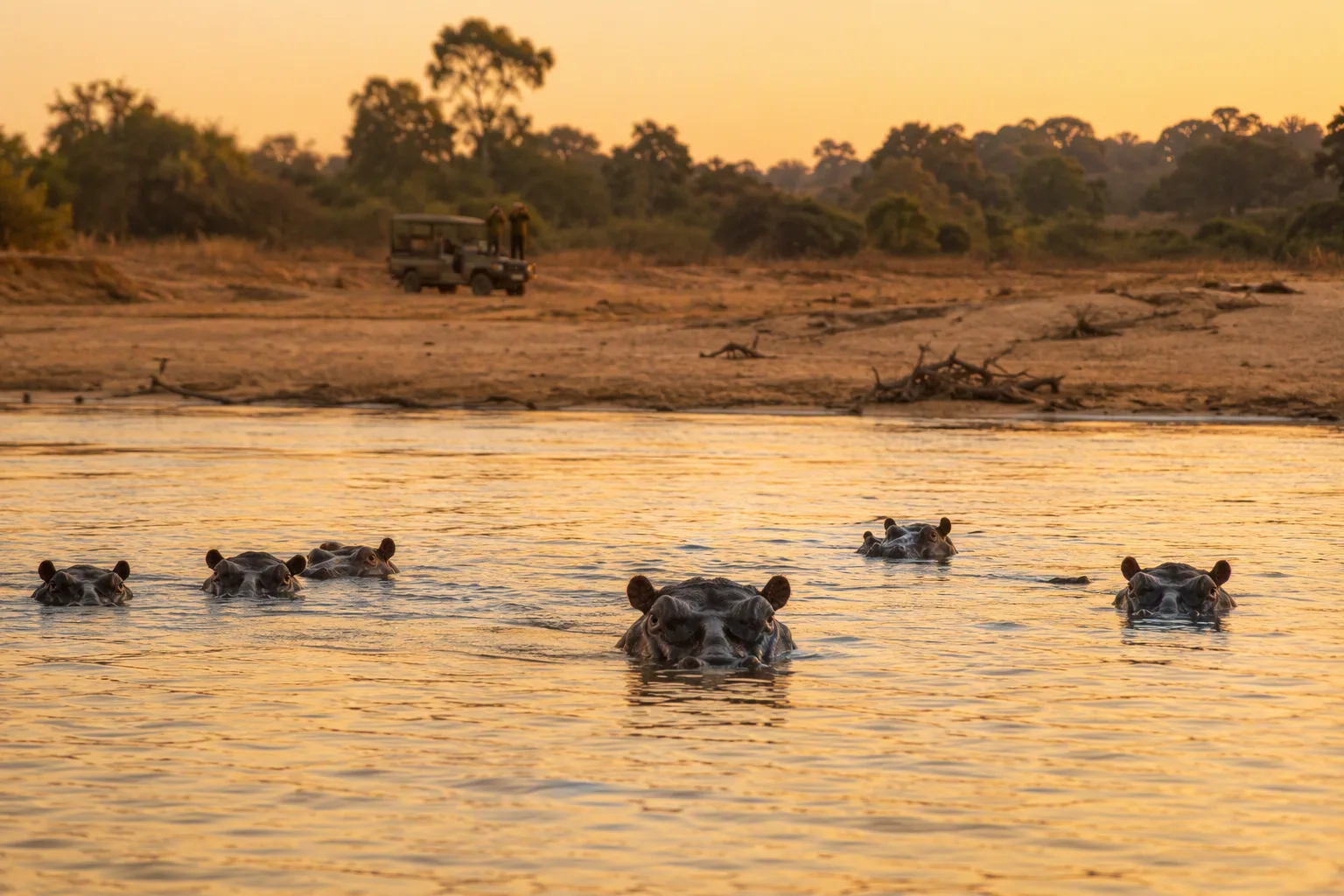
The count from the river keeps rising, and the people counting it keep finding footprints. Five more animals have died of anthrax in the Nabwalya Game Management Area in Mpika District — three hippos and two elephants — taking the cumulative wildlife toll since the outbreak was reported at the end of August to 49 hippos, nine elephants and six buffaloes. The number of reported human cases now stands at 26, according to the Disaster Risk Management Division.
The new figures come from the multi-sectoral rapid response deployment of 21 to 25 September, in which animal health, wildlife and laboratory teams carried out carcass assessments, specimen collection and environmental sampling across the affected area. DRMD National Coordinator Norman Chipakupaku said the teams sighted three elephant and seven hippo carcasses around Kalimba-Chipangu Village, Talwe Village, the Munyamadzi River and the Munyamadzi–Musipazi confluence; three of the hippos and two of the elephants were linked to anthrax. Some carcasses could not be sampled at all — inaccessible, or too far decomposed — and, more worrying for the human chain of transmission, "evidence of community access to some carcass sites was also observed during the investigation," he said.
That evidence is the outbreak's centre of gravity. Anthrax moves to people through hands and knives — the handling, opening and eating of animals found dead — and the response team observed continued wildlife mortalities as a reason to maintain heightened surveillance, prompt reporting and rapid investigation of any new carcass. Its recommendations read like a race against appetite: urgent and safe disposal of carcasses with proper decontamination of sites; routine surveillance extended to environmental sampling of soil and water; and sustained community sensitisation to discourage handling and to promote immediate reporting of suspected animal deaths. The Department of National Parks and Wildlife, working with the relevant sectors, says it will keep monitoring as laboratory results arrive; the Zambia Air Force has flown support to the response in Mpika.
The human number needs its precision. The 26 reported cases are cumulative and largely suspected rather than laboratory-confirmed; earlier in the outbreak, health authorities reported one confirmed case and no deaths, with suspected exposure traced to carcass meat. That is the favourable version of an anthrax outbreak, and Zambia has seen the other kind: in 2023 the country recorded 684 suspected human cases and four deaths across nine of its ten provinces, the worst such event in its history. What decides between the two outcomes is not the bacteria — endemic in these river basins, sporing in the soil for decades — but the speed at which carcasses are found, guarded and buried before they become meat. In Nabwalya this month, the evidence says people are still winning that race against the teams. The response exists to make them stop wanting to.
Sources: Lusaka Times, "Nabwalya GMA records five more anthrax deaths" (30 Sep 2026); DRMD statements via national coordinator Norman Chipakupaku (Sep 2026); Mongabay on the hippo mortality investigation and human exposure (25 Sep 2026); Anadolu Agency on the DMMU deployment (12 Sep 2026); WHO Disease Outbreak News on the 2023 Zambia outbreak (Dec 2023).
Back to the front page