
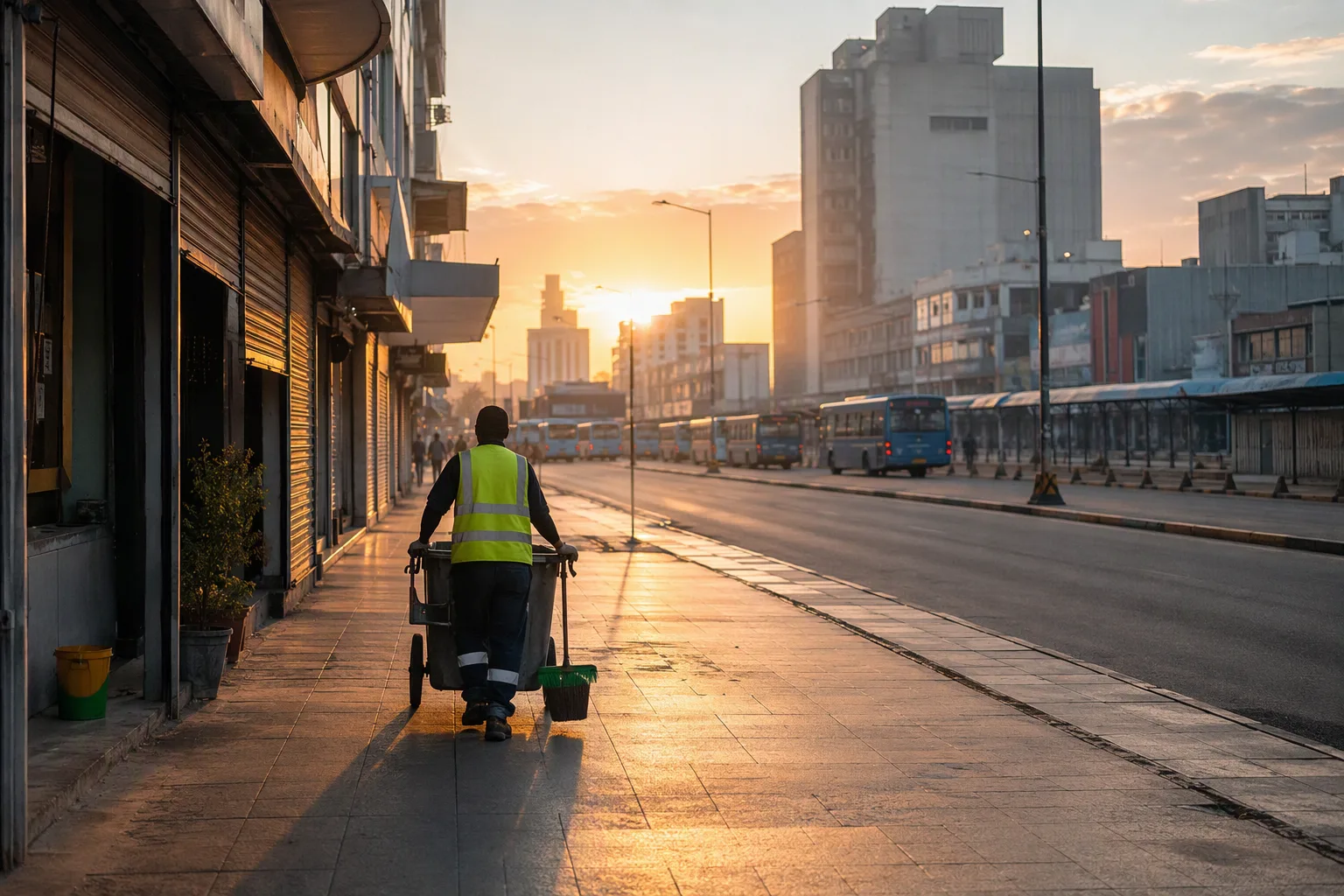
The sweep has a second act, and it knows exactly which street it wants. The Lusaka City Council has announced the rollout of Phase Two of Operation Clear Path, with Katondo Street among the areas targeted as authorities intensify the removal of illegal street vending, unauthorised bus operations and other unlawful activities from the central business district. The announcement came in a statement by the council's assistant public relations manager, Bulumba Nyambe, after a press briefing at the Civic Centre at which the mayor, Chitambala Mwewa, said the phase would focus on further decongesting the CBD and consolidating the gains of the first.
The components are specific. Buses operating from undesignated locations will be relocated to authorised stations, with the Road Transport and Safety Agency and the Zambia Police Service in the operation. Katondo Street gets intensified enforcement after complaints from established businesses that traders occupying shopfronts and access points are making lawful trade impossible; the sale of mobile phones and electronics there carries longstanding legitimacy concerns, including reports that some devices may be stolen property; and vehicles displayed for sale along the street are banned outright — it is not a designated motor-sales area. Mobile traders selling fruit, vegetables and other goods from wheelbarrows have been directed to relocate to recognised centres and register to operate from approved facilities — Soweto Market, City Market and Simon Mwewa Market among them. Police spokesperson Godfrey Chilabi has committed the Service to supporting the enforcement throughout.
The public-health scaffolding underneath the operation has not moved. Cholera was formally declared on 30 September with 304 suspected cases — 62 laboratory-confirmed — and 11 deaths across seven districts; Lusaka District's own count stood at 130 when Phase One cleared Simon Mwewa Lane and Kalusha Bwalya Road on Saturday and pushed along Lumumba Road, Freedom Way, Cha Cha Cha Road and Cairo Road. The council's logic is that blocked drains, waste and dense informal trading are how a waterborne bacterium finds a city centre at the start of the rains. The operation, the mayor has said, is about order, not punishment.
The arithmetic objection, however, is now on the record and unanswered. The Zambia Institute of Architects has warned that Lusaka's informal traders — estimated at 250,000 to 350,000 — outnumber designated trading stands by more than ten to one: the 31 township markets hold just over 11,000 spaces, only about 4,400 of them occupied by registered traders. On the ground the responses split. "We can all come in the market and make profits together — if we are in the market and no one is in the streets, customers will come," said Doreen Mulenga, who trades inside City Market. Maxwell Mwenda, who pulled down his own makeshift shop on Lumumba Road after five years rather than wait for enforcement, was blunter: "I don't even know where to start." Phase Two will be judged by which of those two voices the next month proves right.
Sources: Lusaka City Council statement on Phase Two via ZedGossip and Kalemba (5 Oct 2026); ZNBC, "Lusaka mayor announces second phase of CBD operation" (6 Oct 2026); Lusaka Times, "Mwewa's street clearance is a bold step for Lusaka, but where will 250,000 to 350,000 traders go?" (1 Oct 2026); Zambian Economist on Operation Clear Path's launch (2 Oct 2026); Ministry of Health outbreak declaration (30 Sep 2026).
Back to the front page