
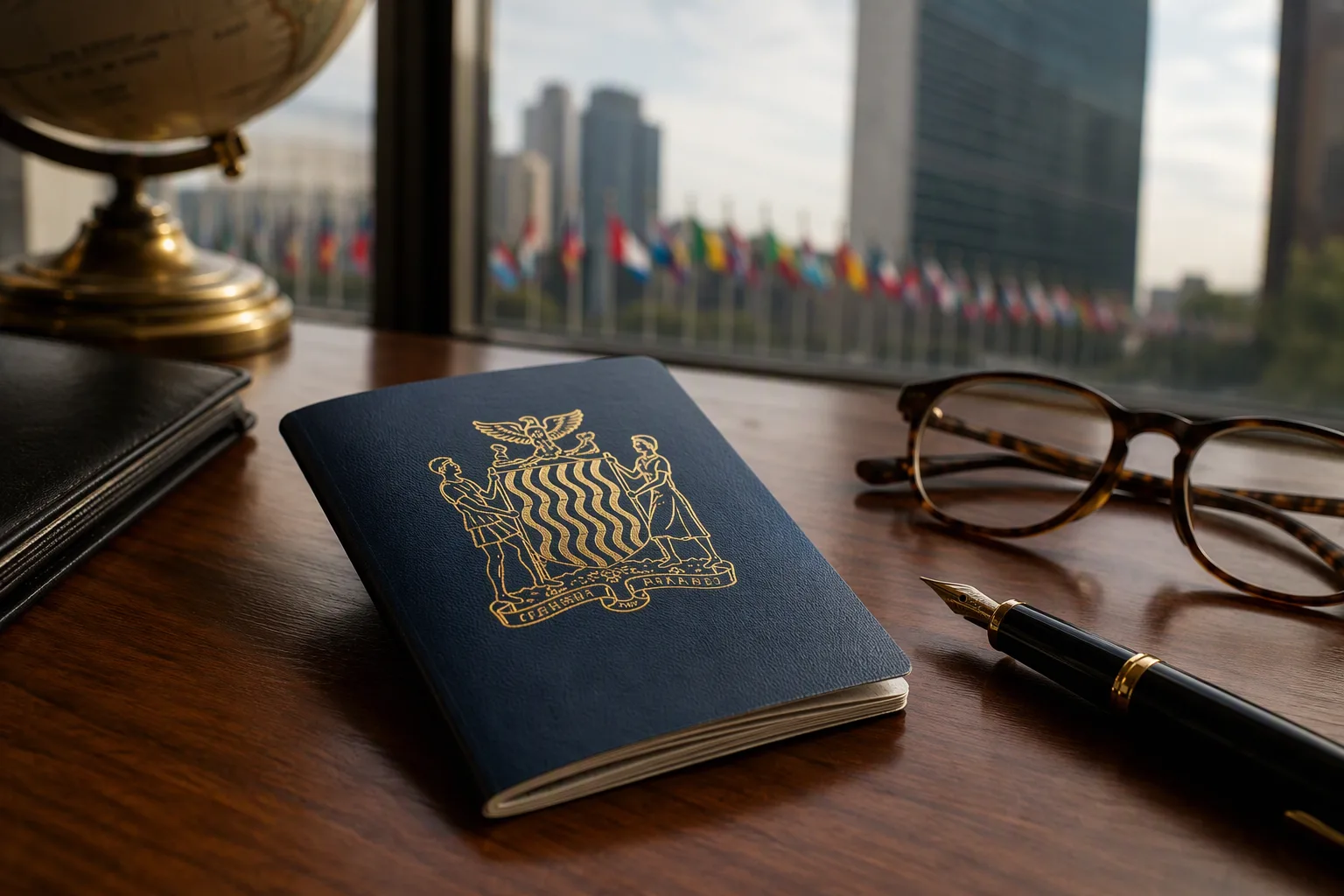
From the sidelines of the 81st UN General Assembly in New York, where he is leading Zambia's delegation in the President's place, Foreign Affairs Minister Mulambo Haimbe has mounted the government's fullest defence yet of a decision that has become a flashpoint: the cancellation, effective 11 September, of the passports of six Zambians living abroad.
The six named by the minister are a roll-call of the government's most prominent exiled critics: former ambassador to Ethiopia Emmanuel Mwamba, former MPs Binwell Mpundu and Emmanuel Banda, former presidential adviser Kaiser Zulu, academic Sishuwa Sishuwa and UK-based content creator Lillian Mutambo. Haimbe's core argument is categorical. "The cancellation of a passport does not amount to cancellation of citizenship," he said. "It does not amount to taking away the right of an individual other than the use of a passport to access foreign countries." The holders, he said, had violated the conditions under which the documents were issued.
He singled out Emmanuel Banda, the former Petauke MP, as the clearest case — describing him as a known felon who escaped lawful custody while facing criminal charges and, he alleged, continued committing offences from platforms abroad. "Every nation of this world is entitled to use legal means available to ensure that the individual comes and answers to the charges," Haimbe said. The other five, he said, also needed to answer questions within Zambia's jurisdiction.
Lillian Mutambo's answer comes by letter, and it has a clock on it. Aongola & Co, acting for the commentator, wrote on 21 September to the Chief Passports and Citizenship Officer, copying the Registrar General and the Attorney General, demanding restoration of her passport within seven days of receipt — a window that expires around Monday. Fail, the firm says, and proceedings follow without further notice.
The letter reads like a tutorial in administrative law. The power to cancel a passport, the lawyers argue, is statutory and must be exercised strictly within the Passport Act No. 28 of 2016. Section 12(1) vests it in the Chief Passports and Citizenship Officer — yet Gazette Notice 1421 appears to attribute the cancellation to the Registrar General, and the government is invited to identify any delegation that would make that lawful. The Act's grounds — wrongful possession, fraud, deportation at government expense, a warrant coupled with flight risk — must be named and factually established; "a bare reference to 'security reasons'," the firm wrote, satisfies neither the statute nor the Constitution. Section 12(2), they note, requires the holder to be informed with reasons within 14 days. And because the cancellation interferes with Article 22's freedom to leave and return to Zambia, any restriction must show a lawful basis, applied after the holder is heard.
"The decision, and the manner in which it was made and communicated, is unlawful, ultra vires, procedurally improper and unconstitutional," the letter concludes — four grounds, any one of which would do.
Haimbe used the same New York interview to push back on the wider frame. Post-election arrests, he said, rest on allegations of criminal conduct, not politics; detainees have access to lawyers and families under Correctional Service rules; and the election itself — more than three million votes for President Hichilema against about 1.9 million for Brian Mundubile — was too decisive to be branded irregular. Zambia, he added, has been building a national peace architecture since 2021. It is a confident brief. On Monday, if Mutambo's lawyers keep their word, part of it moves from the interview room to the courtroom.
Sources: Lusaka Times, "Haimbe Defends Cancellation of Six Passports as Mutambo's Lawyers Give Government Seven Days" (25 Sep 2026); Government Gazette Notice No. 1421 of 2026; Zambia UN Mission press statements (20–25 Sep 2026).
Back to the front page