
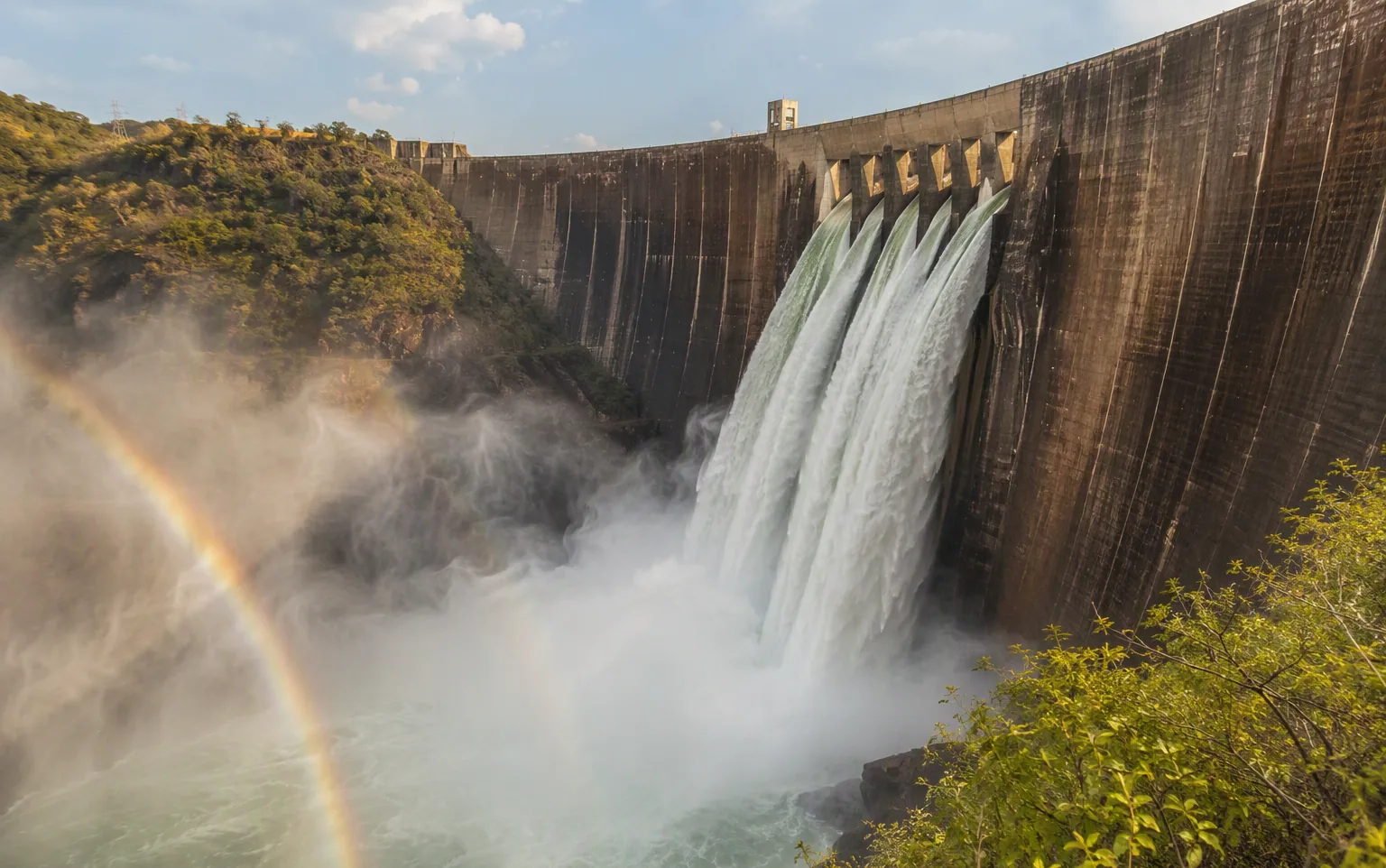
Every serious conversation about Zambia's copper ambitions ends at the same place: electricity. Industry executives estimate that tripling output to 3 million tonnes by 2031 requires at least 2,000 megawatts of new generation — in a system that ran a deficit of nearly 707 megawatts in 2025.
The structural weakness is hydropower dependence: 81% of installed capacity, brutally exposed when the 2024 drought collapsed dam output and pushed mines onto expensive imported power. Load shedding reached as much as 23 hours a day at the worst of it, according to the World Bank.
The recovery is real
But 2026 is not 2024. Lake Kariba's usable storage stood at 46.46% on 4 August, more than double the 22.96% recorded on the same date last year. ZESCO managing director Justin Loongo has ruled out a return to nationwide load shedding this year, citing improved hydro, thermal and solar output and new partnerships with independent power producers — while cautioning that vandalism and local faults can still cause isolated outages.
"The electricity system is not adjacent to Zambia's minerals strategy — it is the minerals strategy."
Barrick appears to agree: its Lumwana expansion includes a new transmission framework developed with ZESCO alongside the mine itself. The question for term two is whether generation can be built faster than the mines it is meant to feed.
Back to the front page