
Strip away the cathedral, the procession and the press statements, and what remains on the charge sheet is a single section of the Penal Code. Section 319 — possession of property reasonably suspected of having been stolen or unlawfully obtained — is an offence about circumstances, not fingerprints. The prosecution does not have to prove that the accused stole anything, nor that he knew with certainty the property was unlawfully obtained. It must prove possession, circumstances that make the unlawful origin of the property reasonably suspect, and — at the heart of the section — the inability of the person in possession to give an account, to the satisfaction of the court, of how the property came to be his. Upon conviction the offence carries up to five years' imprisonment.
The particulars the DEC has recited are narrow: that on dates unknown between 22 April 2021 and 27 December 2023, the Archbishop possessed a blue Toyota Hilux, ALF 7734, reasonably suspected to have been unlawfully obtained from the Zambia Revenue Authority. The context is the concluded disposal case in which former ZRA Commissioner General Kingsley Chanda and Director of Administration Callistus Kaoma were convicted over 22 vehicles — trial records in which the Archbishop's name surfaced as a recipient. Prosecution witnesses in that case described vehicles withdrawn from an internal staff tender and diverted to Patriotic Front figures and sympathisers using employees' details. That is the evidentiary soil from which Monday's charge grows.
The defence's contours are equally visible. The Archbishop's associates have long said the vehicle was a gift — reportedly linked to the late President Edgar Lungu — and a recipient is not a thief; the vehicle was surrendered to the DEC through his lawyer in December 2023, years ago and without concealment. Former ambassador Emmanuel Mwamba has gone further, arguing that the vehicle in question was donated by a ZRA employee and was not among the charged vehicles, and that the earlier convictions rested on what the defence called a forged asset-disposal policy — a claim that persuaded the magistrate who granted Chanda and Kaoma bail pending appeal that their appeal had strong prospects. Expect all of this to be raised: the gift, the surrender, the provenance of the policy, the gap between receiving a thing and knowing its history.
Two features of the section will shape the trial. The first is timing: the alleged possession window closed on 27 December 2023, and the question of what account the Archbishop gave — or declined to give, as he did under caution in January — will be read against what he knew then, not what the country knows now. The second is the standard: "reasonably suspected" is a low bar for suspicion but not for proof, and the court, not the commission, decides whether the account given is satisfactory. The prosecution's January complaint was silence. Silence protected him then; in a trial, the burden structure of Section 319 makes silence a strategy with a price.
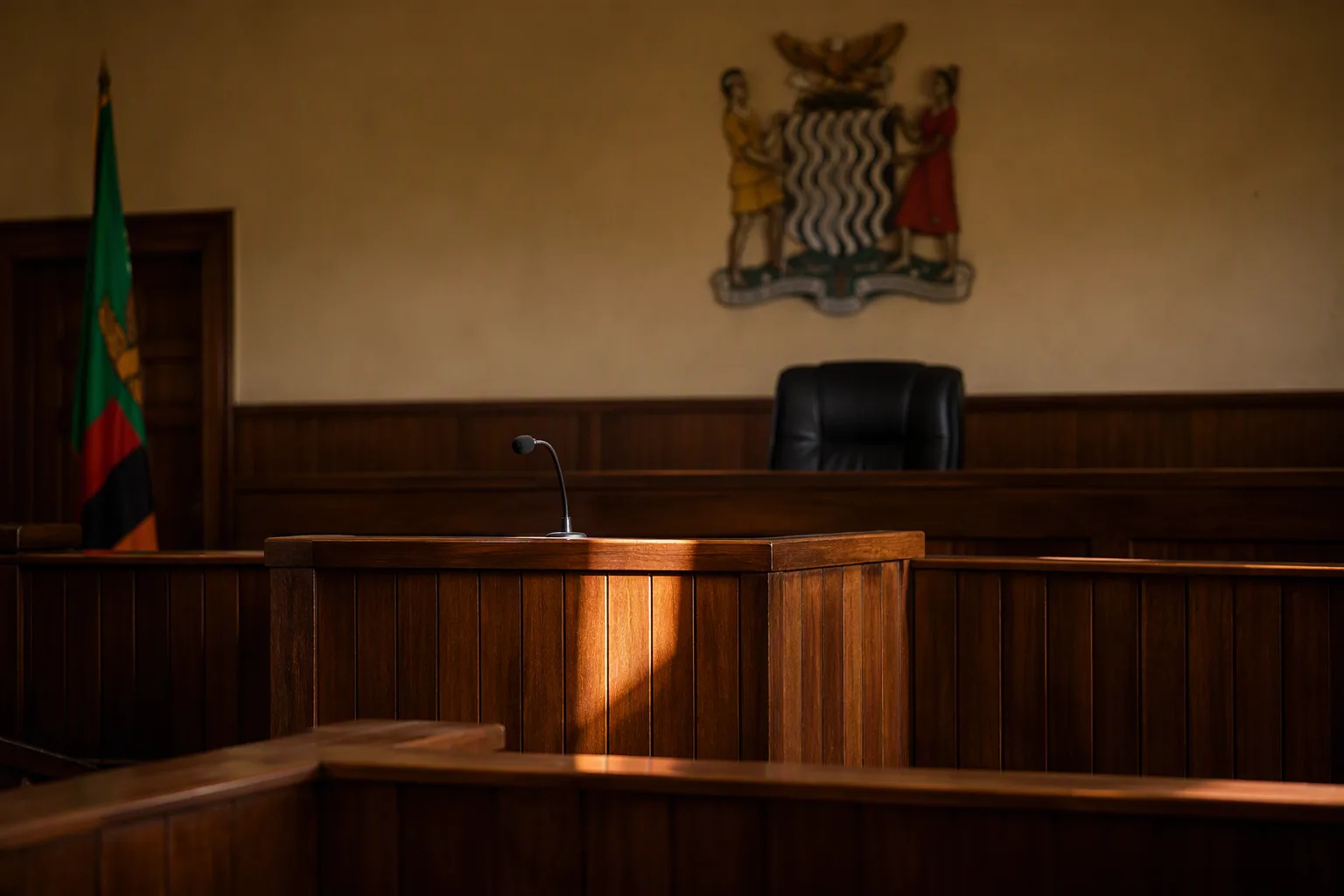
The calendar is now public: mention on 14 October, trial from 3 November. Between those dates sit the election fallout, the Human Rights Council vote, and a Church that has promised to walk with its shepherd. None of that is evidence. What happens in that courtroom will be.
Sources: DEC charge particulars (28 Sep 2026); Penal Code, Cap 87, s.319; Lusaka Times on the Chanda/Kaoma trial testimony (Oct 2025) and on bail pending appeal (Nov 2025); Zambian Observer, Emmanuel Mwamba on the disposal records (Jan 2026); NBC News on the January warn-and-caution (Jan 2026).
Back to the front page