
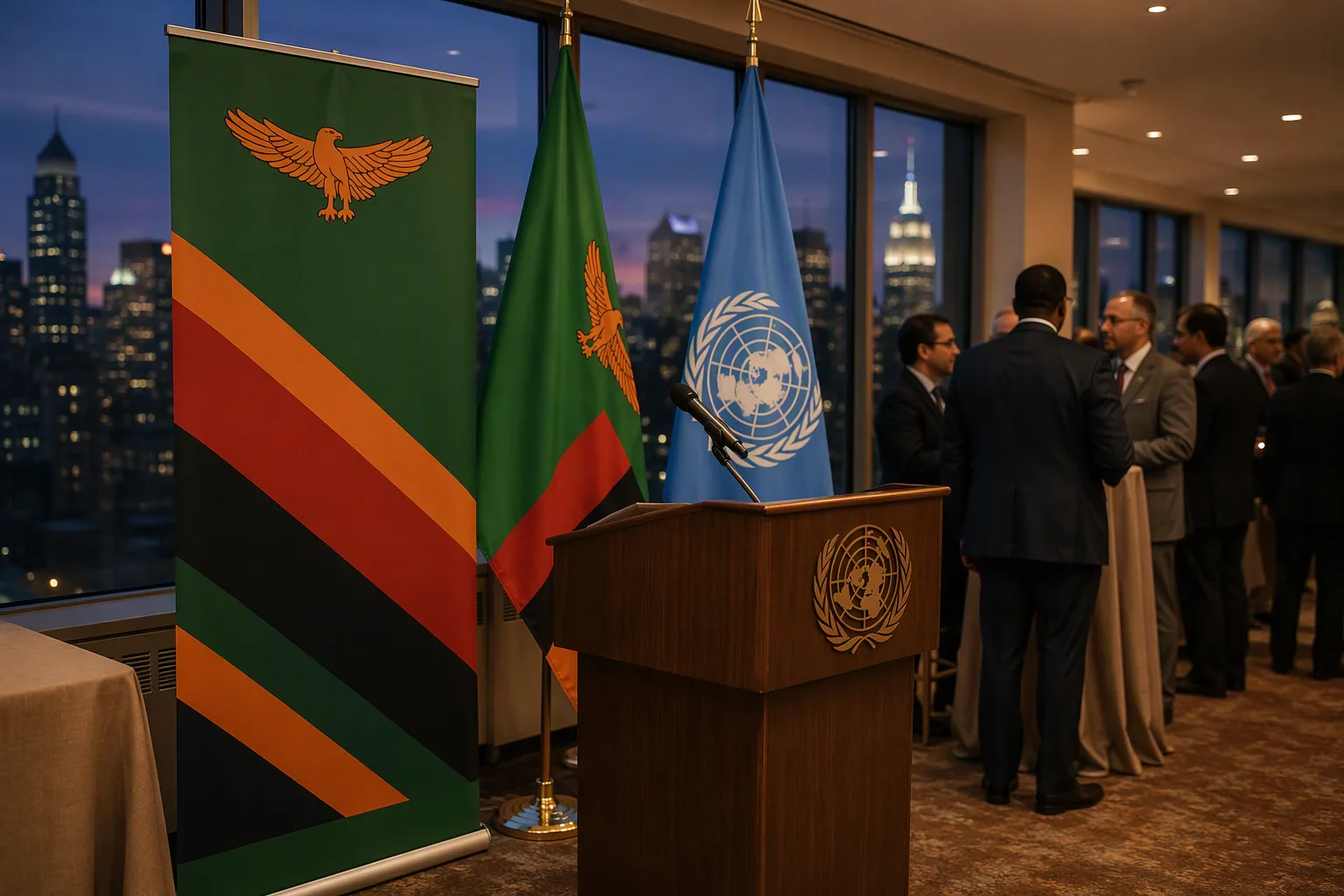
Zambia spent the closing days of the UN General Assembly's high-level week doing what candidates do: working the room. At a reception held to lobby UN member states, the government pressed its campaign for election to the Human Rights Council for the 2027–2029 term, with the vote set for 13 October at UN headquarters in New York.
President Hakainde Hichilema addressed the gathering by video, reaffirming what a statement from the Embassy of Zambia in Washington described as Zambia's longstanding commitment to advancing and safeguarding human rights. Democracy, good governance, the rule of law and human rights, the President said, form the bedrock of sustainable development and enduring peace.
Foreign Affairs and International Co-operation Minister Mulambo Haimbe, who is leading Zambia's delegation in New York, framed the candidature as a conviction that the Council remains indispensable to the universal promotion and protection of human rights. Membership, she said, would be an opportunity for "two-way impact" — bringing the Council closer to citizens, the region and developing countries, while strengthening human rights at home and helping build a council that delivers more effectively everywhere. Zambia, she said, attaches great importance to multilateralism, dialogue, democracy, the rule of law and international cooperation.
The campaign's senior machinery was out in force. Permanent Secretary for International Relations and Co-operation Etambuyu Anamela Gundersen underscored the same themes; Zambia's Permanent Representative in New York, Dr Chola Milambo, argued that the UN's three pillars of peacekeeping, development and human rights are core to what Zambia is; and the country's ambassador in Geneva, Eunice Luambia, thanked stakeholders for what the statement called spirited engagement.
The timing is the story within the story. The reception closed a week in which Zambia's record has been discussed in the same corridors as its candidacy: a European Parliament resolution on post-election repression that specifically references the detentions of opposition figures, and a passport-cancellation order against six Zambians abroad that Ms Haimbe publicly defended earlier in the week. Whether those headlines help or hinder the bid was not a question the delegation entertained at the reception. The government's implicit answer is in the bid's own language — that a seat on the Council is a mechanism to strengthen rights at home, not merely a certificate of them.
What happens next is arithmetic. The General Assembly elects members to the 47-seat Council by secret ballot on 13 October. Zambia's diplomats have seventeen days to convert Friday's reception into votes.
Sources: Mwebantu, "Zambia intensifies campaign for UN Human Rights Council seat" (26 Sep 2026), citing a statement by Charles Tembo, First Secretary Press and Public Relations, Embassy of Zambia in Washington DC; Lusaka Times, "Hichilema committed to safeguarding human rights" (26 Sep 2026); Lusaka Brief reporting on the EU resolution and the passport cancellations.
Back to the front page