
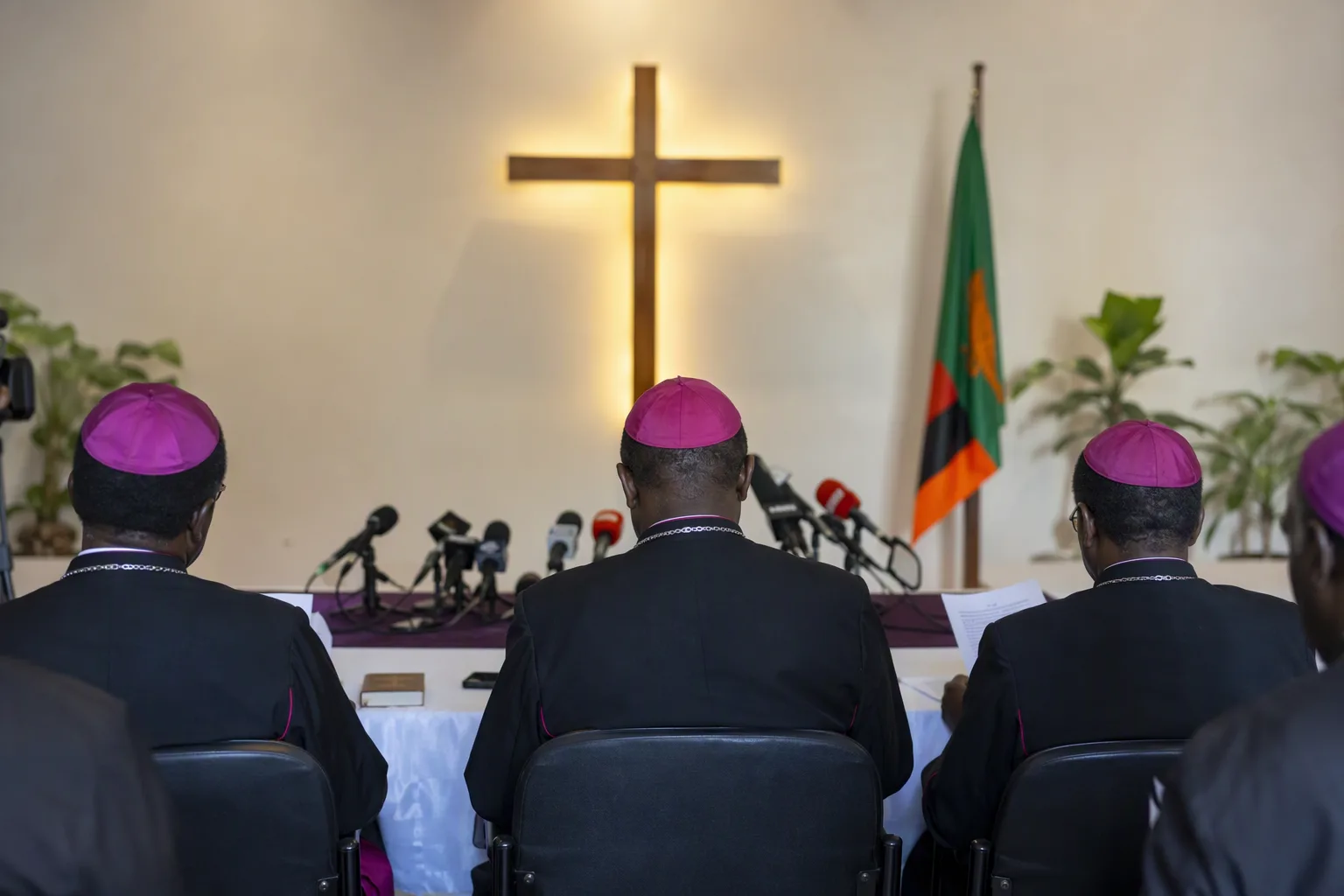
The two statements arrived on the same Wednesday, from the two addresses that still move this country when they speak together. From Kapingila House came a pastoral statement of the Zambia Conference of Catholic Bishops, signed by eight bishops after an extraordinary meeting on Tuesday. From the University of Zambia Chapel came a communique of the Council of Churches in Zambia, closing a Heads of Churches meeting on the state of the nation. Separately drafted, they land as one document: the churches have concluded that the rule of law, the credibility of the 2026 elections and the safety of the political space are now questions the nation must answer, not allegations it can wave away.
The bishops' statement is the wider of the two. The ZCCB raised concern over the credibility and transparency of the electoral process — "concerns over the conduct and management of the 2026 General Elections" — and warned that public confidence in elections underpins the legitimacy of every institution the election produced. It cited the use of ethnic identities for political purposes as a threat to "One Zambia, One Nation"; a narrowing space for independent media, civil society and dissent; restrictions affecting access to justice; harassment, restrictions and arrests of opposition actors — "Democracy requires space for alternative political voices and peaceful political participation" — and debates around presidential terms that "raise anxiety about constitutional safeguards and democratic continuity". Its gravest passage concerns force: reports of arbitrary arrests and detention, of military personnel in civilian spaces, and of excessive or unlawful use of force, "including the loss of civilian lives". No case is named. "Every human life is sacred and must be protected," the bishops wrote, and: "Public institutions must be instruments of justice and service rather than sources of fear."
The CCZ named the case the bishops left unnamed. Its president, Reverend Ackson Banda, called for a thorough, independent, impartial and transparent investigation into the death of former cabinet minister Mutotwe Kafwaya, killed in Lusaka's Kabulonga area in August during what police described as an intelligence-led operation by a joint task force. Police said officers came under gunfire and returned fire; the opposition contests that account, and a complaint over the killing has since been lodged with the International Criminal Court at The Hague. The council also warned against arrests being used "as a substitute for trials" and detention "as a substitute for investigations", raised concern over people held without being promptly brought before a competent court, and asked for urgent investigation of allegations of organised groups or militias operating outside established security structures — without naming which groups it meant.
The statements part company on the economy, and the parting is instructive. The CCZ acknowledged progress in debt restructuring, in key economic indicators and in free education, while noting that many Zambians still struggle with the cost of living, unemployment, food insecurity and energy. The ZCCB kept its brief narrower: governance, rights and the conduct of the elections. Both prescribed the same remedy — a sustained national dialogue across political, ethnic, religious and social lines, with reconciliation "shown through justice, forgiveness and rebuilding trust rather than declarations and ceremonies", in the CCZ's words. The bishops added civic and constitutional education for the young, protection for journalists and civil society, and support for families affected by violence or arbitrary detention — and declared October a month of Holy Rosary prayers for peace, urging the faithful "that no day pass without this powerful prayer".
The week in which the statements landed does the framing for them. Seven days earlier the Archbishop of Lusaka spent a night at Chimbokaila on a charge his Church and the opposition call persecution and the State calls process; the ZCCB's president, Archbishop Ignatius Chama, had earlier accused the ruling party of seeking to silence the Church — a charge the UPND rejects, describing the Catholic Church as an important voice in governance. The pastoral statement does not mention the Archbishop's case; it does not need to. "We make this statement not to deepen fear but to give hope," the bishops wrote. "We know many of our people are anxious and uncertain about the future." What the government does with the two documents — a dialogue, a dismissal, or a silence — is now the test the churches have set it.
Confirmed vs. alleged
Confirmed: The ZCCB issued its pastoral statement at Kapingila House on 30 September, signed by Archbishop Chama, vice-president Bishop Charles Kasonde and Bishops George Lungu, Clement Mulenga, Patrick Chisanga, Edwin Mulandu, Raphael Mweempwa and Auxiliary Bishop Gabriel Msipu Phiri; the CCZ issued its communique the same day after a Heads of Churches meeting at UNZA Chapel; the CCZ demanded an independent investigation into Mutotwe Kafwaya's death; a complaint over the killing has been lodged with the ICC.
Alleged / contested: The characterisations the statements rest on — that the 2026 elections lacked credibility, that arrests have been arbitrary, that force has been excessive, that militias operate outside the security services — are the churches' cited concerns, not findings of any court; the police account of the Kafwaya operation (officers came under fire and returned fire) is contested by the opposition and has not been independently established.
Sources: Lusaka Times, "Catholic Bishops Question Credibility of 2026 Elections as CCZ Demands Kafwaya Probe" (30 Sep 2026); Zambia Monitor, "Catholic bishops fear Zambia in the grip of tribal politics… call for dialogue, reconciliation" (1 Oct 2026); Zambian Observer, "Catholic bishops raise concern over political tensions, electoral credibility" (30 Sep 2026); ZCCB pastoral statement (30 Sep 2026); CCZ communique (30 Sep 2026); Lusaka Brief reporting on the Banda case (30 Sep 2026).
Back to the front page